Getting a calm dog in public spaces is one of the most common goals owners tell me they have. It is also something I can help you work towards through my one-to-one dog training in Coventry.
They want a dog they can take to cafés, pub gardens, village centres, holidays and days out without barking, whining, pacing, scavenging or constantly demanding attention.
They want a dog that can relax, settle and simply enjoy being with them while they enjoy the experience too.
Not a dog that has to be constantly managed.
Not a dog that barks at every dog that walks past.
Not a dog that paces under the table, whines throughout your meal or tries to steal someone’s sandwich.
A dog that can simply relax.
A dog that can sit with you at a café, pub garden, village centre or on holiday and calmly watch the world go by.
The good news is that this is absolutely something you can teach.
The less good news?
Most dogs don’t naturally know how to do it. These skills can be introduced from an early age through my one-to-one puppy training in Coventry, helping puppies learn how to settle, focus and cope with everyday environments.
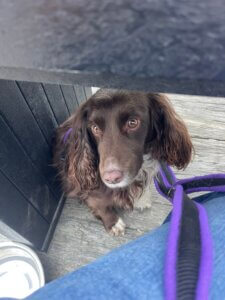
What Does a Calm Dog in Public Actually Look Like?
When people tell me they want a calm dog in public, they often picture a dog lying quietly under a table while they enjoy a coffee.
And honestly, that’s not far off.
A calm dog in public typically:
- Lies down quietly
- Watches the world go by
- Has relaxed body language
- Doesn’t need constant food rewards
- Isn’t trying to greet every person that walks past
- Isn’t begging for food
- Isn’t constantly scanning the environment
- Can settle and simply exist alongside you
One thing that’s important to understand is that calm doesn’t mean switched off.
Your dog can still notice what’s happening around them.
The difference is they don’t feel the need to react to everything.
Why So Many Dogs Struggle in Public Spaces
Many owners expect too much, too quickly.
They decide they want to take their dog to a café, so they head straight to a busy café on a Saturday morning and hope for the best.
Unfortunately, that’s a little bit like deciding you want to run a marathon and signing up for one next weekend.
The foundations haven’t been built yet.
Most dogs need to learn how to:
- Relax around distractions
- Cope with new environments
- Settle for periods of time
- Focus on their owner
- Walk nicely on lead
- Ignore food and other temptations
- Watch the world without feeling the need to join in with everything
These are all skills that need practising.
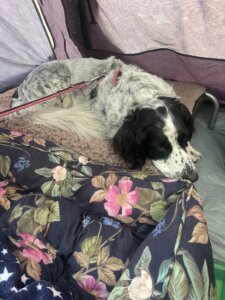
A Tired Dog Isn’t Automatically a Calm Dog
This is one of the biggest myths I hear.
Many owners think:
“If I tire my dog out first, they’ll settle.”
Sometimes that works.
Sometimes it doesn’t.
A tired dog isn’t automatically a calm dog.
In fact, some dogs become more over-aroused when they’re overtired.
Think about children.
A tired child doesn’t always calmly fall asleep.
Sometimes they become louder, more excitable and more emotional.
Dogs can be exactly the same.
What we’re really trying to teach is an off switch.
The ability to relax.
The ability to do nothing.
The ability to simply watch life happen without feeling the need to be involved in every part of it.
Meet Your Dog’s Needs First
Before expecting your dog to settle in a busy environment, it’s important to think about whether their needs have been met first.
Have they had an appropriate walk?
Have they had opportunities to sniff?
Have they had mental stimulation?
Have they had a chance to toilet?
Have they had an opportunity to decompress?
Setting your dog up for success starts long before you arrive at the café, pub or holiday destination.
The more thoughtful you are beforehand, the more successful you’re likely to be afterwards.
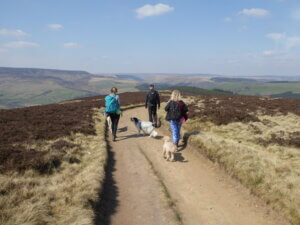
How to Build a Calm Dog in Public Spaces – Start Small and Build Gradually
One of the biggest mistakes owners make is trying to jump straight to the end goal.
If your dream is to enjoy a Sunday lunch in a busy pub, don’t make that your starting point.
Instead, build up gradually.
You might start by:
- Sitting in a quiet beer garden
- Choosing a table furthest away from the entrance
- Staying for ten minutes
- Having a quick drink
- Leaving while your dog is still succeeding
Then gradually build up.
Maybe next time you stay for half an hour.
Then an hour.
Then a drink and a snack.
Eventually a full meal.
And eventually the busy environments you’ve been working towards.
Progress doesn’t come from pushing dogs into situations they’re not ready for.
It comes from helping them succeed in environments they can cope with. This gradual, individual approach is central to how I work with dogs and their owners.
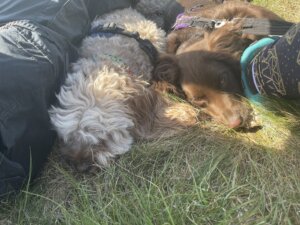
The Skills Your Dog Needs First
Before expecting a dog to settle in public spaces, there are several skills I like to have in place.
Settle Training
Teaching your dog how to relax on a bed, mat or blanket.
Loose Lead Walking
Nobody enjoys being dragged into a café.
Engagement
Your dog needs to know that paying attention to you is worthwhile.
Focus Around Distractions
Dogs need practice around people, dogs, food, noises and movement.
Emotional Regulation
Learning that not everything requires a response.
An Off Switch
Perhaps the most important skill of all.
The ability to simply relax and watch the world go by.
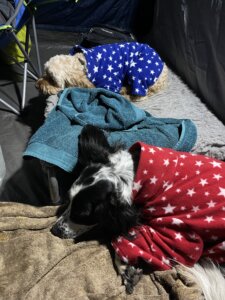
Real Life Training Pays Off
One of the reasons I value these skills so much is because they make everyday life easier.
Recently, while I was in Cornwall, my dogs came with me to:
- Cafés
- Pub gardens
- Village centres
- Harbour walks
- Shops
- Afternoon tea
- Benches overlooking the sea
There were people, children, dogs, pushchairs, food and plenty of distractions.
The reason I was able to enjoy those experiences wasn’t because I had spent the previous week desperately training for them.
It was because we’d spent years building the foundations.
The loose lead walking.
The engagement.
The ability to settle.
The ability to simply be.
That’s what real-life dog training gives you.
Freedom.
What If Your Dog Is Struggling?
One of the best pieces of advice I can give is this:
Leave.
There seems to be a belief that once you’ve arrived somewhere, you have to stay.
You don’t.
If your dog is struggling:
- Increase distance
- Move somewhere quieter
- Shorten the session
- Go back a step
- Leave completely if necessary
If your dog regularly barks, lunges or becomes overwhelmed around people or other dogs, my reactive dog training in Coventry can provide more personalised support.
I always have an exit plan when I take my dogs somewhere new.
When we were in Cornwall, I chose where to sit carefully.
I didn’t sit next to a busy children’s play area.
I chose quieter corners.
And I knew that if my dogs weren’t coping, we could simply leave.
That’s not failure.
That’s good dog ownership.
If you’re unsure whether your dog’s behaviour is excitement, stress or overwhelm, learning to read their body language is a great place to start. Have a read here Dogs Trust Dog Body Language Guide
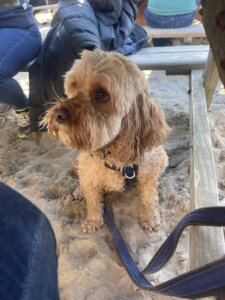
A Calm Dog in Public Is Built, Not Born
A calm dog in public isn’t something most dogs are simply born with.
It’s something that is built.
Through training.
Through thoughtful experiences.
Through gradually increasing difficulty.
Through teaching your dog how to relax.
And through giving them opportunities to succeed.
The goal isn’t a dog that obeys commands all day.
The goal is a dog you can genuinely enjoy spending time with.
A dog that can join you for a coffee.
A pub lunch.
A holiday.
A walk through a village.
Or simply sit on a bench while you eat a Cornish pasty and watch the world go by.
And that starts with teaching your dog one of the most important skills they’ll ever learn:
How to do absolutely nothing.
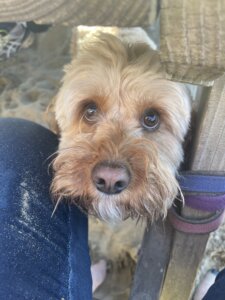
Want to read more or want help with your dog?
- How to Train a Dog You Can Take Anywhere
- How to Get Your Dog to Pay Attention on Walks
- Dream Dog Programme