
How Do You Know Your Puppy Has Become a Teenager?
If your puppy has become a teenager, you may notice changes in listening, recall, confidence and how they respond to the world around them.
Your puppy has been doing brilliantly.
They’ve learnt loads of behaviours, they’re listening well, recall is going nicely, and you’re starting to feel as though all that hard work is paying off.
Then suddenly…
They stop listening.
Behaviours you thought were solid seem to disappear.
Recall gets wobblier.
Other dogs become much more interesting.
And you start wondering what on earth happened to your lovely puppy.
This is often the point where owners say:
“It feels like all the training has gone out of the window.”
But very often, it hasn’t.
Your puppy may simply have hit adolescence.
This stage can bring hormonal changes, increased independence and much bigger emotions. The RSPCA notes that adolescence can begin anywhere from around 6–12 months and continue into the second year, depending on the individual dog.
And while it can feel frustrating, this stage is incredibly normal.
The key thing is not to panic.
Take it back to basics.
Sign 1: They Suddenly Stop Listening
This is one of the biggest signs owners notice.
Your puppy knew how to sit yesterday.
Today, apparently, they’ve never heard the word before.
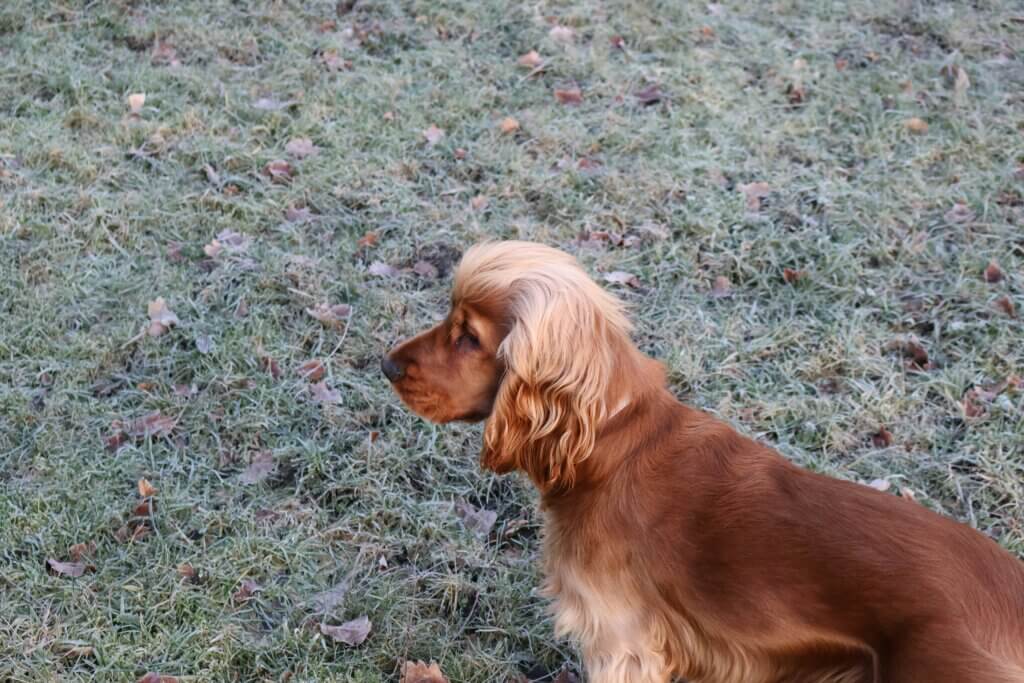
I still remember this happening with Maisy.
She was about six months old and we were in a training class.
I asked her to sit.
She walked three steps backwards and just looked at me.
So I asked her again.
And she did exactly the same thing.
Three steps backwards.
Looked at me.
And I remember thinking:
“Yep. I think we’ve hit adolescence.”
This is the point where I always say to clients:
“If you’re going to act like a puppy, I’m going to treat you like a puppy.”
Not in a negative way.
It simply means we bring the treats back out, make things easier again, and show the dog what is expected of them.
Because often the training hasn’t disappeared.
Your puppy just needs more help accessing it.
If your puppy has suddenly stopped listening, this is where going back to easier environments and reinforcing the basics can make a huge difference. you can read more here on another blog Why has my puppy suddenly stopped listening.
Sign 2: Recall Starts to Fall Apart
This is another big one.
A puppy who used to follow you everywhere can suddenly start exploring much further away.
The world becomes more interesting.
Smells become more interesting.
People become more interesting.
Dogs become more interesting.
And suddenly you are no longer the most exciting thing in the environment.
Maisy did this too.
Her recall had been brilliant.
Then one day she spotted some children nearby and wanted to go over to them.
I recalled her.
She looked over her shoulder.
Looked directly at me.
And carried on anyway.
That was the point where she lost off-lead access for a while.
Because I see off-lead freedom as a privilege.
If your dog cannot listen reliably, they’re not ready for that level of freedom yet.
So Maisy went back on a long line while we rebuilt her recall.
Not as a punishment.
Just as sensible management while we worked through the stage.
And this is something I tell clients a lot:
If recall starts to wobble, don’t keep testing it.
Use a long line.
Reward check-ins.
Practise success.
And build it back up again.
I support many dogs with the Recall Training and you can read more about it here.
Sign 3: Other Dogs Suddenly Become Much More Interesting
This is where the “party in the park” idea becomes really important.
Your puppy may suddenly become obsessed with:
- other dogs
- people
- smells
- movement
- everything happening around them
The world is one big party.
And your job is to make sure the party in the park is still with you.
That does not mean your dog should ignore everything else.
But it does mean we want them to learn that engaging with you is still worthwhile.
If your puppy is struggling around other dogs, distance is massively important.
The closer you are, the harder it is for your dog to think clearly and respond.
So create space.
Reward check-ins.
Reward disengagement.
Let your puppy notice the world without needing to run over and interact with everything in it.
If this is something you’re seeing, it links really closely with my blog on why dogs pull towards every dog on walks.

Sign 4: Their Emotions Feel Bigger
Teenage dogs can feel like everything is turned up a notch.
Excitement feels bigger.
Frustration feels bigger.
Worry can feel bigger.
Their recovery time can be slower.
And sometimes situations they coped with beautifully a few weeks ago suddenly feel much harder.
Hormonal and developmental changes are part of this stage, and adolescent dogs can appear less able to control their impulses even when they previously responded well.
This is where owners sometimes say:
“My dog is being stubborn.”
But I heard that literally this morning from someone.
And very often, they’re not being stubborn at all.
We need to look underneath the behaviour.
What is making this hard?
Is the environment too busy?
Are they too close?
Are they overtired?
Are they overexcited?
Are they struggling to cope?
The word “stubborn” doesn’t really help us.
Understanding the reason does.
Sign 5: Old Behaviours Start Coming Back
This can be the most frustrating part.
You thought jumping up was sorted.
Then it comes back.
You thought chewing was finished.
Then it starts again.
Lead pulling increases.
Settling gets worse.
Barking creeps back in.
And it can feel as though all the work you’ve done has disappeared.
It hasn’t.
Regression during adolescence is really common.
And the answer is usually the same:
Take it back to basics.
I’ve had clients come back to me during this stage and say:
“I could just hear your voice saying, take it back to basics and you’ll be fine.”
And that reassurance matters.
Because when you know this stage can happen, it feels much less like something has gone wrong.
You just return to the foundations and work through it.
Adolescence Looks Different in Every Dog
This is really important.
Not every dog hits adolescence in exactly the same way.
Maisy was almost textbook.
She hit six months old and it was like someone flipped a switch.
She took me through the developmental stages almost by the book.
At the time, I was early in my dog-training career and really wanted to understand puppy development properly, and Maisy certainly gave me plenty of firsthand experience.
Envy was completely different.
She was a really easy teenager.
I didn’t have the same issues with her at six or seven months.
Then she hit around 12 months old.
And suddenly she started pushing boundaries much more.
I still remember popping out of the living room for about a minute.
When I came back, she had managed to pull up the corner of the carpet.
It was easy enough to fix and wasn’t a big drama.
But it was such a good reminder that developmental stages are individual.
Some dogs sail through adolescence.
Some have a difficult week.
Some have a difficult few months.
Some wobble much later than you expect.
There is no one exact timeline.
Why Adolescence Can Feel So Difficult
This stage catches a lot of owners out because the puppy often looked as though they were doing really well.
Then everything changes.
The RSPCA specifically notes that adolescence is a stage when some puppies are rehomed because owners struggle with the sudden behavioural changes.
That’s why I think it is so important to warn owners that this stage can happen.
If you expect it, you’re far less likely to think:
“I’ve failed.”
Or:
“There’s something wrong with my dog.”
Instead, you can think:
“Okay. We’ve hit adolescence. Back to basics.”
What Should You Do With a Teenage Dog?
Keep it simple.
You do not need to suddenly make training harder.
In fact, the opposite is often more useful.
Try:
- going back to easier environments
- getting the treats back out
- rewarding check-ins
- rebuilding recall on a long line
- keeping training short
- reinforcing behaviours you thought were already solid
- using more distance around distractions
- managing greetings carefully
- giving your dog enough rest
- avoiding constantly testing them
If your dog used to be able to do something at “level 10” and now they can’t, go back to level 5.
Build confidence again.
For example, there are some parks in Coventry that I would class as much harder environments.
A very busy park can easily be your level 10.
So don’t practise there if your dog is currently struggling.
Start somewhere easier.
Set them up to succeed.
The Party in the Park Is Always With You
This is something I say a lot.
The outside world is exciting.
That is normal.
But we want your dog to learn that fun, rewards and engagement are also with you.
That means rewarding:
- checking in
- coming back
- choosing to stay close
- responding to their name
- disengaging from distractions
- choosing you when the environment is exciting
You do not need to compete with the whole world.
But you do need to make yourself relevant.
Don’t Mistake Adolescence for Stubbornness
Teenage dogs are often labelled:
- stubborn
- naughty
- defiant
- difficult
- dominant
But those words don’t tell us much.
A teenage dog may simply be:
- distracted
- overwhelmed
- excited
- frustrated
- more independent
- working in an environment that is too difficult
Once we understand what is going on, we can actually help them.
How Long Does Dog Adolescence Last?
This varies enormously.
The RSPCA says adolescence can start from around 6–12 months and may continue until roughly 18–24 months.
But the difficult bits do not necessarily last that whole time.
For one dog, you may see a wobble for a few days.
For another, it may last weeks.
For another, you may see different behaviours appear at different points as they mature.
That is why comparing your dog with someone else’s is not always helpful.
Development is individual.
Need Help With Your Teenage Dog?
If your puppy has suddenly become more distracted, stopped listening, started pulling, lost their recall or feels much harder to manage than they did a few weeks ago, this is exactly the sort of thing I help with through my 121 Dream Dog Programme.
The Dream Dog Programme is designed for older puppies and adolescent dogs who need help with things such as:
- recall
- loose lead walking
- focus
- calmness
- jumping up
- impulse control
- settling
- engagement around distractions
The aim is not to simply “get through” adolescence.
It is to help your dog come out the other side with really solid skills for adult life, which I do on my Dream Dog Programme
Final Thoughts
Your puppy has not suddenly turned into a different dog.
They are growing up.
And sometimes growing up looks messy.
You might see recall wobble.
You might see old behaviours come back.
You might see more independence.
You might see much bigger emotions.
And yes, you may occasionally wonder where your lovely puppy has gone.
But the training has not disappeared.
Take it back to basics.
Help them succeed again.
And remember:
If they’re going to act like a puppy, treat them like a puppy.
Get the treats back out, show them what is expected, and keep going.
This stage passes.
And all of that training you put in absolutely still matters.