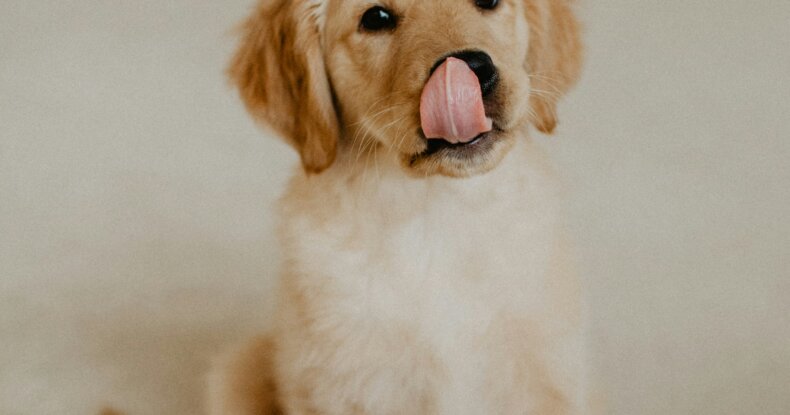
Your puppy was doing brilliantly.
They were coming when called, responding to their name, sitting when asked and generally seeming to understand what you wanted.
Then suddenly, it feels as though all of that training has disappeared.
They ignore you outside. They get distracted by everything. They seem far more interested in dogs, people, smells and what is happening around them than they are in you.
And it can leave you wondering:
“Have I done something wrong?”
Usually, no.
Very often, your puppy is moving into a new developmental stage, becoming more independent, and discovering that the world around them is incredibly interesting.
Your puppy probably hasn’t forgotten everything you’ve taught them.
They may simply be finding it much harder to listen.
Why Your Puppy Suddenly Stopped Listening
If your puppy suddenly stopped listening, it doesn’t necessarily mean they have forgotten their training.
One of the biggest misconceptions in dog training is that once a puppy has learnt something, they should be able to do it anywhere.
Unfortunately, it doesn’t quite work like that.
Your puppy may be brilliant at responding to their name in your kitchen.
But ask them to do exactly the same thing in a park with dogs running around, people walking past and hundreds of interesting smells on the ground, and suddenly the task is much harder.
Dogs need to learn to generalise behaviours.
That means understanding that “come” means come whether you are in the living room, the garden, on the pavement or halfway across a field.
That takes practice.
So when your puppy appears to suddenly stop listening, it doesn’t necessarily mean the training has disappeared.
It may simply mean the situation has become more difficult than the training they have done so far.
Adolescence Changes Everything
As puppies move towards adolescence, many owners notice a change.
That sweet little puppy who followed you everywhere may suddenly start exploring further away.
They may become more confident.
More curious.
More interested in other dogs.
More interested in people.
More interested in smells.
And sometimes far less interested in what you are asking them to do.
This doesn’t mean your puppy has suddenly become stubborn.
It is a normal part of growing up.
Their world is getting bigger and they are learning that there are lots of exciting things out there to investigate.
This is also why behaviours that seemed reliable a few weeks ago can suddenly feel much less predictable.
If this stage sounds familiar, you might also find my blog about adolescent dogs and the teenage stage helpful.
The Blue Cross also explains that adolescence can bring changes such as reduced recall and difficulty responding to previously learned training.
Why Your Puppy Listens at Home but Not Outside
This is something I hear all the time.
“They do it perfectly at home.”
And I completely believe you.
But home is often the easiest possible environment.
Think of it like levels of difficulty.
Your kitchen might be level one.
Your garden might be level two.
A quiet pavement might be level four.
A busy park full of dogs, people, squirrels and smells might suddenly be level ten.
If your puppy has only practised a behaviour at levels one and two, it isn’t realistic to expect them to perform perfectly at level ten.
That doesn’t mean they are ignoring you on purpose.
It means the environment is making the task much harder.
Instead of thinking:
“They know this. Why won’t they do it?”
Try asking:
“Can my puppy actually manage this in this environment yet?”
That question can completely change how you approach the problem.
The Environment May Be More Rewarding Than You
Your puppy loving the outside world does not mean they have stopped loving you.
But sniffing, exploring, chasing, watching other dogs and meeting people can all be incredibly rewarding.
And sometimes the environment is simply more exciting than whatever we are offering.
This is particularly noticeable with recall.
Your puppy might happily come running towards you in the house.
Outside, however, they are being asked to leave something genuinely interesting.
That is a much bigger ask.
This is why good training isn’t about constantly trying to compete with the environment.
We want to teach our puppies that engaging with us is worthwhile too.
Reward them for checking in.
Reward them for choosing to come back towards you.
Reward them when they disengage from something interesting.
Those small moments build a dog who learns that paying attention to you has value.
Repeating Yourself Can Make Listening Worse
We have all done it.
“Come.”
“Come!”
“COME!”
Or:
“Sit.”
“Sit.”
“Sit!”
The problem is that repeating a cue over and over can teach your puppy that the first one doesn’t really matter.
They begin to learn that they can wait until the third, fourth or fifth time before responding.
Instead, try to give your cue once.
If your puppy cannot respond, think about why.
Are they too distracted?
Are you too far away?
Is the environment too difficult?
Are they too excited?
Do they actually understand what you are asking in that situation?
Rather than simply saying the cue louder, make the task easier and help your puppy succeed.

Going Back a Few Steps Is Not Failure
Sometimes the best thing you can do is make training easier again.
That might mean practising recall in your garden before taking it back to a busy field.
It might mean practising around one calm dog at a distance instead of expecting your puppy to listen around ten dogs.
It might mean reducing the distance between you and your puppy.
Or simply doing a few easy, enjoyable training games where they can be successful.
Going backwards temporarily doesn’t mean your training has failed.
It means you are giving your puppy the opportunity to practise the behaviour correctly again.
Then you can gradually build the difficulty back up.
Reward What You Want to See
It is very easy to only notice your puppy when they are doing something we don’t want.
Pulling.
Ignoring us.
Running off.
Jumping up.
But there are probably lots of small moments throughout the day when your puppy makes really good choices.
Maybe they glance back at you during a walk.
Maybe they choose to stay close.
Maybe they move away from another dog.
Maybe they come back towards you without being called.
Reward those moments.
You don’t always need to ask your puppy to do something before giving them reinforcement.
Sometimes the best training happens when we notice and reward the behaviour our puppy offers naturally.
Those check-ins and small choices become really valuable as your puppy gets older.
what gets rewarded gets repeated!

Are You Asking Too Much?
Sometimes a puppy who has “stopped listening” is actually a puppy who is struggling.
Perhaps the environment is too busy.
Perhaps they are overtired.
Perhaps they are overexcited.
Perhaps there is something in the environment they are worried about.
Perhaps they have simply been training for too long.
If your puppy usually takes food but suddenly refuses it, struggles to look at you or seems completely unable to respond to something they normally understand, that can be useful information.
They may be too overwhelmed by what is happening around them.
Instead of pushing harder, increase the distance from the distraction or move somewhere quieter.
Training becomes much easier when your puppy is in a state where they can actually learn.
A Long Line Can Give You Breathing Space
If recall is one of the behaviours that has suddenly fallen apart, a long line can be incredibly useful.
It gives your puppy more freedom to explore without allowing them to repeatedly practise ignoring you and disappearing into the distance.
It also means you don’t have to constantly call them back simply because you are worried they might run off.
You can give them space, reward their natural check-ins and practise recall when you have a realistic chance of success.
If recall is becoming a struggle, you can also read more about my recall training and how I help owners build a more reliable response around real-life distractions.

Your Puppy Isn’t Being Stubborn
When behaviour changes, it is tempting to label it.
Stubborn.
Naughty.
Defiant.
Testing you.
But those labels don’t really tell us anything useful.
Your puppy might be:
- distracted
- excited
- tired
- overwhelmed
- becoming more independent
- working in an environment that is too difficult
- unsure what you are asking
Once we work out why they are struggling, we can actually help them.
That is far more useful than assuming they are simply choosing not to listen.
What Should You Do If Your Puppy Has Suddenly Stopped Listening?
Start by making things easier.
Try:
- moving to a quieter environment
- reducing the distance from your puppy
- practising around easier distractions
- giving cues once rather than repeating them
- rewarding spontaneous check-ins
- using better rewards when the environment is more difficult
- keeping training sessions short
- using a long line while rebuilding recall
- gradually increasing the difficulty again
Most importantly, give your puppy opportunities to succeed.
Good training should not feel like constantly catching your puppy out when they get something wrong.
We want to create situations where they can make the right choice and be rewarded for it.

Need Help Getting Your Puppy Listening Again?
If your puppy has suddenly become more distracted, stopped responding outside or seems to have forgotten everything you’ve taught them, you don’t have to simply wait and hope they grow out of it.
This is exactly the sort of thing I help owners with through my 121 Puppy Training and 121 Dog Training programmes.
We can work on things such as:
- engagement
- recall
- focus
- calmness
- listening around distractions
- loose lead walking
- building better habits as your puppy moves into adolescence
The aim isn’t to make your dog ignore the world around them.
It is to teach them that they can enjoy the world while still being able to listen and respond to you.
Final Thoughts
Your puppy probably hasn’t forgotten their training.
They may simply have reached a stage where the world has become bigger, more exciting and much harder to ignore.
So rather than asking:
“Why won’t my puppy listen?”
Try asking:
“What is making it difficult for my puppy to listen right now?”
That small change in question often tells you exactly where you need to start.