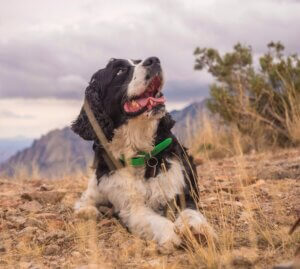
Why does my dog spend five minutes sniffing one patch of grass?
Dog scent work is something every dog does naturally, whether they’re following a trail through woodland or investigating the same patch of grass on a local walk. My Track & Trail classes give dogs a structured way to use those natural scenting abilities.
Have you ever found yourself standing waiting while your dog seems completely absorbed by a smell you can’t even detect?
It’s easy to assume they’re wasting time or simply being distracted.
In reality, they’re doing exactly what dogs evolved to do.
While we rely mainly on our eyesight to understand the world, dogs experience much of life through their nose. Every walk is full of information that we can’t detect. They’re discovering which dogs have visited before them, what wildlife has passed through, how recently another dog walked by, and even subtle changes in the environment.
Once you understand just how important your dog’s sense of smell really is, you’ll never look at sniffing in quite the same way again. Some breeds are especially motivated by scent, which is one of the natural traits I consider within my breed-specific dog training.

Dogs Experience the World Through Their Nose
Humans are visual creatures.
We notice colours, movement and landmarks.
Dogs experience life very differently.
Their noses contain up to 300 million scent receptors, compared with around 6 million in humans. Even more remarkable is the amount of brain dedicated to processing smells.
Every scent tells a story.
One patch of grass might reveal:
- Which dogs have walked there.
- Whether they were male or female.
- How long ago they passed.
- Whether wildlife crossed during the night.
- Whether someone dropped food earlier that morning.
What seems completely ordinary to us is packed with fascinating information for your dog.
Why Sniffing Is So Mentally Tiring
Many owners believe a tired dog simply needs a longer walk.
Sometimes that’s true.
But physical exercise is only one piece of the puzzle.
Using the nose requires concentration, decision making and problem solving. Your dog isn’t simply smelling. They’re processing huge amounts of information and making sense of it.
Think about the difference between going for a gentle jog and completing a challenging crossword puzzle.
Both use energy.
One mainly exercises the body.
The other exercises the brain.
Dogs need both.
This is why many owners notice their dog settles more calmly after a walk where they’ve been allowed plenty of time to sniff compared with a faster walk where they’ve simply covered distance.
Why We Shouldn’t Rush Our Dogs
Modern life often means we’re in a hurry.
It’s tempting to encourage our dogs to keep moving so we can finish the walk.
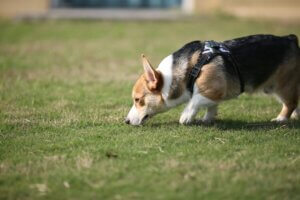
But allowing appropriate opportunities to sniff gives dogs the chance to engage in one of their most natural behaviours.
That doesn’t mean every walk should involve stopping every few metres.
Instead, it’s about finding a balance between walking together and giving your dog permission to investigate the world around them. Working with your dog’s natural needs rather than against them is an important part of my approach to dog training.
Very often, slowing down for a few minutes creates a much more fulfilled dog than adding another mile onto the walk.
An Easy Scent Game to Try at Home
You don’t need specialist equipment to introduce more scent work into your dog’s life. You can also explore my online dog training courses for practical activities and training support you can work through at home.
One of the easiest activities is a simple garden search.
Scatter a handful of your dog’s food or a few treats across the grass while they’re inside.
Then let them out and encourage them to find them using their nose.
Rather than relying on eyesight, they’ll naturally begin searching with scent.
It’s simple.
It’s enjoyable.
And it’s brilliant mental enrichment.
Why Dog Scent Work Is So Powerful
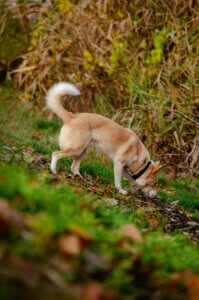
Dog scent work builds far more than a good nose. Confidence, focus, problem-solving and emotional regulation are also important skills within my one-to-one dog training in Coventry.
It encourages:
- Confidence.
- Focus.
- Problem-solving.
- Independence.
- Emotional regulation.
- Natural enrichment.
Many owners are amazed when they see just how capable their dog really is once they stop directing every movement and simply allow them to work things out for themselves.
Watching your dog solve a scent challenge without any help is incredibly rewarding.
It also changes the way you see your dog.
Instead of thinking about teaching them what to do next, you begin appreciating everything they’re already capable of.
From Everyday Sniffing to Track & Trail
If your dog loves sniffing on walks, Track & Trail gives them an even bigger opportunity to use those natural abilities.
Instead of searching randomly, they learn to follow a specific scent trail while working as a team with their owner.
It’s fascinating to watch.
Owners often come away amazed at what their dog can achieve, while dogs leave having used one of the most powerful tools they possess: their nose.
The four-week introduction course teaches both dogs and owners how to enjoy scent work safely and successfully, whatever your dog’s age or previous training experience.
Because dogs work individually, Track & Trail can also suit many dogs who find busy group classes overwhelming. If your dog regularly barks, lunges or struggles around other dogs or people, you can also learn more about my reactive dog training in Coventry.
Final Thoughts
Sometimes the most rewarding activities aren’t about teaching our dogs something new.
They’re about giving them the opportunity to do what they were born to do.
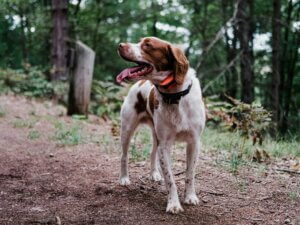
The next time your dog stops to sniff, try seeing the world from their perspective.
You might discover that those extra few minutes aren’t slowing the walk down at all.
They’re the most important part of it.
The more opportunities you give your dog for dog scent work, the more you’ll understand just how remarkable their nose really is. You can also read more about why sniffing can tire your dog out more than another walk.
Ready to Discover What Your Dog’s Nose Can Really Do?
If you’d like to explore structured dog scent work and experience the incredible partnership that develops when dogs follow their nose, my Track & Trail introduction course is the perfect place to start.
Track & Trail is one of the best ways to encourage natural dog scent work in a structured and enjoyable way.
Whether your dog is young, older, confident or simply loves to sniff, you can both discover just how remarkable their nose really is through my Track & Trail classes around Coventry, Kenilworth and Leamington Spa.