

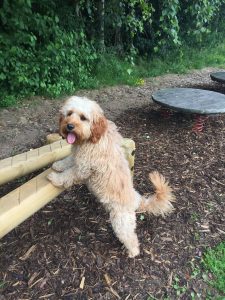
The socialisation period during puppyhood is a very important time of a dog’s life (and it is often not realised how important it is) as it will help shape your dogs future personality and temperament. It’s very important that a new dog owner understands the importance of this critical stage of development. For the first two years their life, it is important to keep on socialising them and taking them everywhere they can possibly go and training them in a wide variety of different situations, so that they generalise all the behaviours you have taught them.
Puppies go through behavioural stages of development and what happens during these stages will have a profound effect on them physically, emotionally and will also effect their behaviour, so therefore will really effect the dog that they will become. You need to be aware that there will be some variations of the timings of when they hit each stage due to breed type, size and speed of growth, but we can look at the timings of the stages and use them as a rough guide as we watch him grow. The age of which a puppy enters each period may vary considerably between breeds, so we must remember that every dog is different and progresses at its own rate and there are many circumstances that can affect these stages which include genetics, environment, level of care, nutrition, stress, etc.
But as a general rule, dogs from the same breed will usually progress at the same speed. Smaller breeds mature at a faster speed than the larger breeds, so this will affect the timing of the later stages, but larger breeds may develop quicker in the early stages. You will notice the changes in behaviour and emotional reactions as he goes through the different stages, as well as physical changes.
Prenatal: Conception to birth
If you are a breeder, it is vital to keep your breeding bitch in excellent condition as it can affect the puppy’s behaviour. They need to be kept in a happy and relaxed state with no stress and fed the correct food and exercised.
Neonatal : 0-2 weeks old
When a puppy is born they are completely reliant on their mother as their senses are undeveloped, they will have no brain waves and are born deaf and blind. The relationship they develop with their mother and the way that she treats her puppies will have a massive effect on their behaviour for the rest of their life. At this stage, they tend to sleep for around 90% of his time and will only wake to feed. During these first two weeks, he will be highly sensitive to touch, pain, temperature and taste. He is unable to regulate his own temperature so will need to be kept at a constant temperature at all times (and no too hot). This is also a time when pups may die due to abnormalities, stress or killed due to being deformed.
Transitional: 2-4 weeks
There is a very rapid maturation of the senses during this stage, their eyes open at the end of the third week and they begin to hear, so they are able to react to situations. Their puppy teeth will begin to come though, their tails will start wagging and they will find their voice by growling and barking. They are no longer the vulnerable puppy they once were and become a livelier puppy and begin to sleep less.
They will start to engage in playful biting and pawing and will now be capable of regulating his own body temperature and will search for warmer or colder areas as needed. They suckle from their mother and also gets her to regurgitate food by licking around her muzzle, and this is the start of the weaning process. They will also being to beg for food and will become more demanding with his mother, and conflict may occur. You can begin to train them as early as 15 days old by using food as a reinforcer.
At three weeks they become more vocal and will be practising a wide variety of vocalisations and will now be communicating through body posture and movement and he will be able to start wagging his tail. At this age they will develop very important social skills through play with his littermates and their mind will develop. Their ears will become more mobile when they reaches 5 weeks, and will have more movement in their facial expressions as their muzzle grows and their muscles develop.
As soon as puppies begin to walk, they follow each other around and will tend to stick together as a pack. This is the first sign of pack behaviour, you will be able to watch them carrying toys and playing tug, you may see them defending their food and also may see several puppies following one around. They will take turns and try and figure out where each of them rank in the pack order, but this will not become fixed until they are older. They will learn their bite inhibition at this stage before pain is felt from his mother and litter mates. They will also use their mouth to explore the environment around them and a lot of their actions are based on a drive to survive.
How the mother treats her litter has a massive effect on the outcome of each individual puppy and the dog that they will become. If the mother is too tough you may end up with a submissive puppy, but as he grows he may become a forceful dog himself or have poor maternal behaviours dependant on the rest of his characteristics. If you are a breeder, it’s important to keep an eye on a litter, as if they have bad experiences at this stage it can lead to a withdrawn or aggressive puppy and he may grow up to have a fear of people, dogs, noises and other animals
Socialisation: 4-6 weeks dog to dog, 4-12 weeks dog to humans & other animals.
At around 21 days, they will start the most important 8 weeks of their life as this is the optimum time to socialise them. You need to get your puppy to experience as many different situations, people, noises, objects, etc. as possible. You need to make sure you balance how much you are introducing them to as many different and new situations as possible and to be handled as much as possible without over tiring your puppy and making sure that they are given a chance to sleep, so that they are able to process it all. Between 7-8 weeks is the prime time for a puppy to leave their litter and go to their new home, as they are no longer reliant on their mother and if you can get them home and settled before they reach 8 weeks old it will help them as they will not have hit the first fear instinct stage.
First Fear Impact Stage: 8-11 weeks.
Just as your dog is becoming more confident and wants to explore more, they hit the first fear impact stage. They are born with self-preservation behaviour and they may become fearful of things you may not expect; this can even happen to the most socialised dog. The best thing you can do when this happens is to lead by example and show him that there is nothing to be fearful of and then quickly move him onto something new. It is important that your puppy is not forced into any situation that they are fearful of, but is gently shown that there is no need to be frightened.
Remember, comforting a dog when they are anxious isn’t wrong; sometimes dogs do just need a hug and some reassurance. By showing them some reassurance and then moving them onto something new will show them that there is no reason to be anxious. If this is not corrected and rectified now, they may become fearful of the situation or object for the rest of their life.
Seniority Classification Period: 12-16 weeks.
This is often referred to as ‘The age of cutting’ as at this stage their confidence is growing and may start to test their boundaries of the hierarchy in the family. If this was a child it would be the start of adolescence.
Puberty/Juvenile Period: 12 weeks to 5 months.
You will see a gradual improvement of motor skills, strength and activity during this stage, but it does overlap with adolescence. Even though they only have a short attention span, they now have a fully developed learning capacity and they will start to understand the consequence of their behaviours. What happened in the socialisation stage (8 to 12 weeks) will have an impact on how your puppy behaves now, but continuing the socialisation all the way until they are approx 2 years old will help you have a well-balanced dog.
Flight Instinct Period: 16 weeks to 8 months.
It’s important to have close and careful control during this time and not allowing your dog to free roam. Even dogs who have had 100% recall to this age may still turn a deaf ear to you or simply wander off on a more interesting scent, depending on how confident they are. It may last from a few weeks or for a few months, and if your puppy successfully gets to chase and catch (for example) a rabbit at this stage, it will become a learned behaviour and it may last for the rest of their life.
Adolescence: 5/6 months -11/14 months & Second Fear Impact Stage.
Adolescence has hit and your puppy has hormonal changes going on; so they will be having adult desires but are lacking the social skills and experiences that they need to act on them. They also hit a second fear impact stage during this period, where even if they were not fearful of something before they may now be frightened of it. You will need to be mindful that they are in this stage, you can watch their body language and try not push them into any situations that they seem nervous of and ensuring any new situations that they do experience are positive ones.
Maturity / Adulthood: 1-3 years.
As a general rule, bitches mature before males and will display adult behaviours first. This is more prominent to see in larger maturing breeds. One way that is sometimes used to measure maturity, is by testing the hierarchy and leadership in the family.
Your dog will always need some guidance and leadership through his life to help you maintain control. You need to remember that just because he has learned a command, does not mean that it is imprinted for life. Learning is an ongoing process and the outcome is reliant on the situations around him.
Want the best start for your puppy? Then come and join our puppy training classes – here