Type of Client: Adolescent dog owner
Client/Project Name: Jane & Tiggy
Project Location: Coventry
Service Provided: 121 Dog Training
Helping Tiggy Learn That She Didn’t Need to Say Hello to Everyone
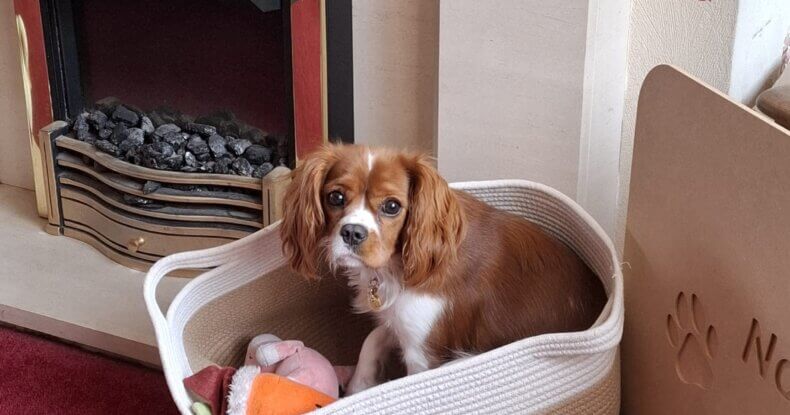
Tiggy was eight months old when Jane first contacted me for help.
A small Cavalier King Charles Spaniel weighing around 6kg, Tiggy was an incredibly sweet, sociable young dog — but she found the world very exciting.
People were exciting. Dogs were exciting. Visitors arriving at the house were very exciting.
Jane wanted help with three main things: teaching Tiggy to walk more calmly on lead, helping her cope better when visitors arrived, and finally getting on top of some remaining toilet-training problems.
But underneath all of those individual behaviours was a common theme.
Tiggy needed to learn that she didn’t have to respond to everything happening around her.
The Challenges Jane & Tiggy Were Facing
Tiggy’s enthusiasm for people and dogs made everyday situations harder than they needed to be.
On walks, she wanted to interact with the things happening around her rather than remaining connected to Jane. At home, visitors arriving could send her excitement levels soaring.
She was also still having occasional toileting accidents and found it difficult to properly settle in some situations.
In the garden, Tiggy would rush through the back door as soon as it opened, charge down the garden and bark at birds, dogs and noises around her.
None of these behaviours were unusual for an adolescent dog.
Rather than simply trying to stop them, we needed to give Tiggy the skills to make different choices.
Looking at the Whole Dog
As with all of my training programmes, we didn’t just look at the individual behaviours Jane wanted to change.
We talked about Tiggy’s body language, daily routine, enrichment, sleep, food and the things she found rewarding.
Tiggy’s appetite could be quite variable and she would quickly lose interest in foods that had previously been exciting. Finding rewards she genuinely valued therefore became an important part of the training.
Cocktail sausages, hot dog sausage and chicken all proved particularly useful!
We also discussed her everyday diet and Jane subsequently moved Tiggy onto Butternut Box, which she was eating much more enthusiastically.
Jane was already using enrichment such as LickiMats and snuffle mats, so we added appropriate natural chews into Tiggy’s routine too.
The aim wasn’t simply to keep her occupied. Chewing could also become part of helping Tiggy transition from excitement into calmer behaviour.
Creating a Different Routine for Visitors
Instead of waiting for Tiggy to become extremely excited when somebody arrived and then trying to calm her down afterwards, we created a plan for the whole arrival.
As the visitor entered, Jane could scatter some food for Tiggy to find and then direct another scatter towards the kitchen.
Visitors were asked to wait until Tiggy had all four paws on the floor before saying hello.
Once everybody was inside and settled, Tiggy could have an appropriate chew.
This began to change the pattern from:
Door opens → enormous excitement → greet everybody immediately
to something much calmer and more predictable.
Tiggy still got to enjoy visitors. We were simply helping her learn that their arrival didn’t need to become the biggest event of the day.


Teaching Tiggy to Make Good Choices
Impulse control became another important part of our work.
One of the exercises we used was It’s Your Choice, a game designed to encourage the dog to think rather than constantly relying on us to tell them “no”, “leave it” or “stop”.
I really like teaching dogs this way.
We often micromanage dogs without realising it. I want them to learn that their own choices can make good things happen.
Tiggy became very good at the game.
We also used slow-feeding exercises to help her practise controlling herself around food and lowering her arousal, alongside focus games such as Magic Hand.
These exercises weren’t just party tricks.
The same ability to pause, think and make a choice could then help Tiggy when she saw a dog, met a person or encountered something exciting outside.
Building Calm, Connected Lead Walking
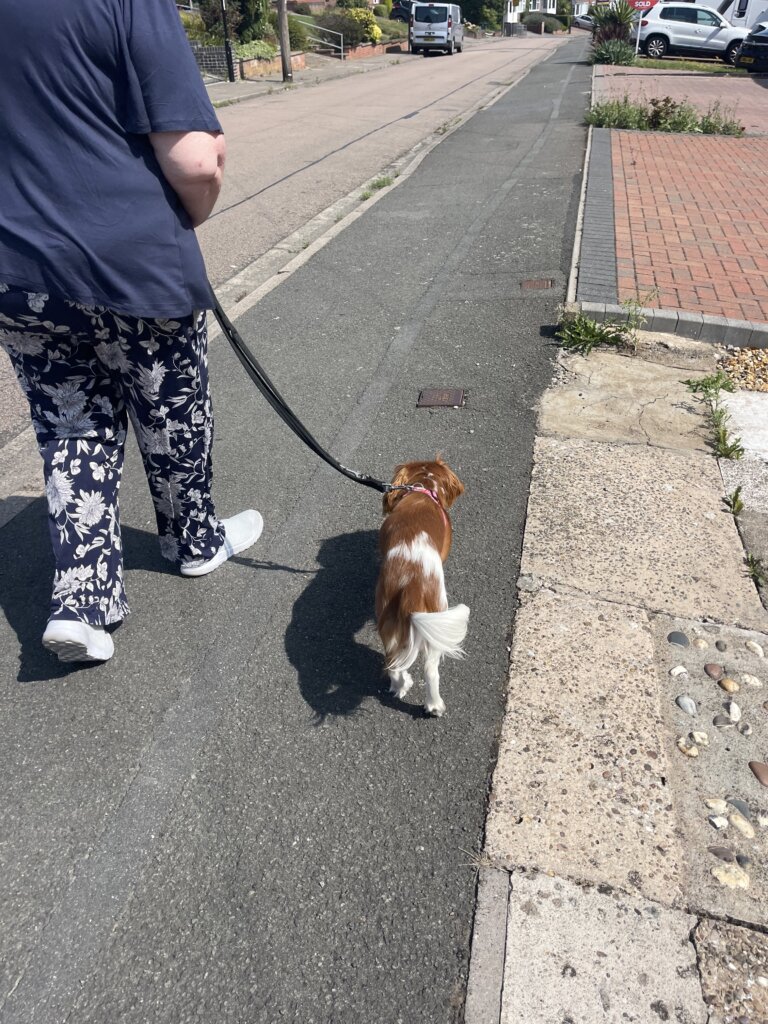
Jane had already put a lot of work into Tiggy’s lead walking before we started working together, and there were some really good foundations there.
Our job was to refine it.
We worked on Tiggy walking alongside Jane, rewarding natural check-ins and making sure the reinforcement we were offering was genuinely valuable enough to compete with the environment.
We also adjusted little habits that had developed, such as Tiggy jumping up towards the food while walking.
Consistency was important.
Pulling is incredibly reinforcing because, from the dog’s perspective, it works — they pull and they get where they wanted to go.
So we needed to make walking calmly beside Jane worthwhile too.
Teaching Tiggy That the World Was None of Her Business
One of the biggest changes came from teaching Tiggy that she didn’t need to interact with every person or dog she saw.
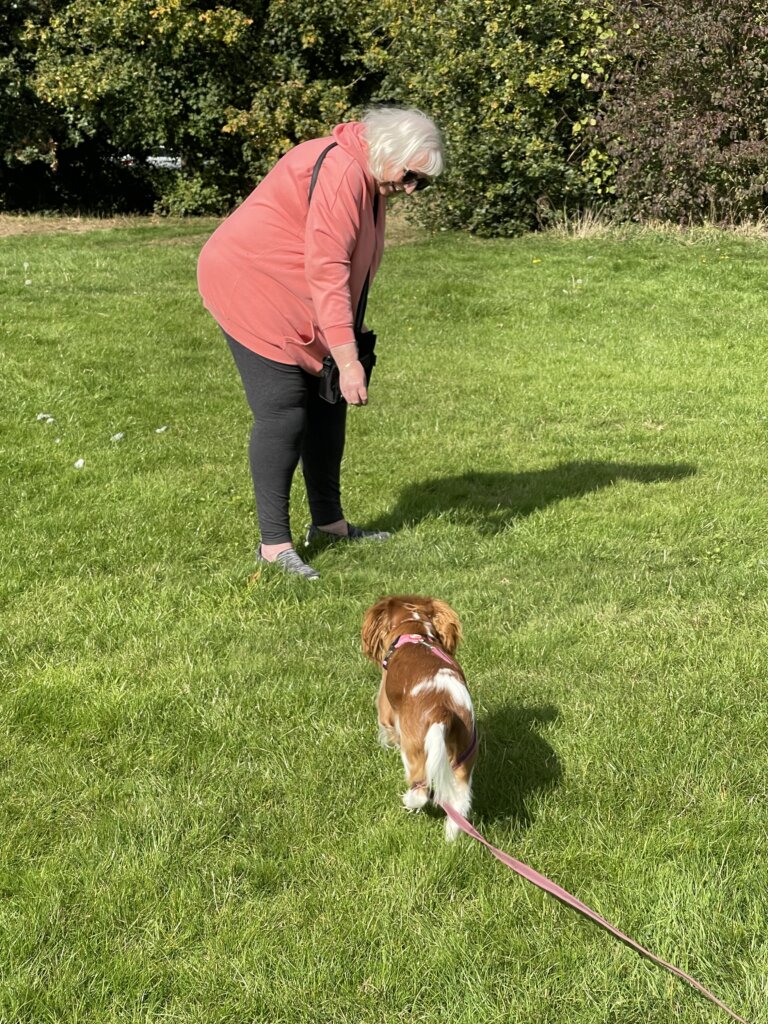
We used food scatters when appropriate, rewarded her natural check-ins with Jane and worked at distances where Tiggy could still think and eat rather than becoming overwhelmed by excitement.
Jane also began using my one-in-three rule.
Tiggy didn’t need to say hello every time she saw someone.
When it was suitable, she might greet one person or dog, while the others simply became things she could notice and move past.
That distinction is really useful for social dogs.
Being sociable doesn’t mean needing access to everybody.
Over time, Tiggy became increasingly able to walk past people and dogs unless Jane gave her permission to interact.
From Charging Into the Garden to Settling Beside Jane
We also spent time working on Tiggy’s behaviour at home.
The garden was particularly difficult.
As soon as the back door opened, Tiggy had developed a habit of pushing through, charging straight down the garden and barking at whatever she could hear or see.
So we slowed everything down.
We taught her to wait while Jane opened the door, allow Jane to step through first, and then go outside when released.
That small change altered the way Tiggy entered the garden.
Instead of beginning every garden trip at full speed, she started from a much calmer place.
We then worked on calmly noticing birds, dogs barking and other everyday noises rather than feeling the need to respond to everything.
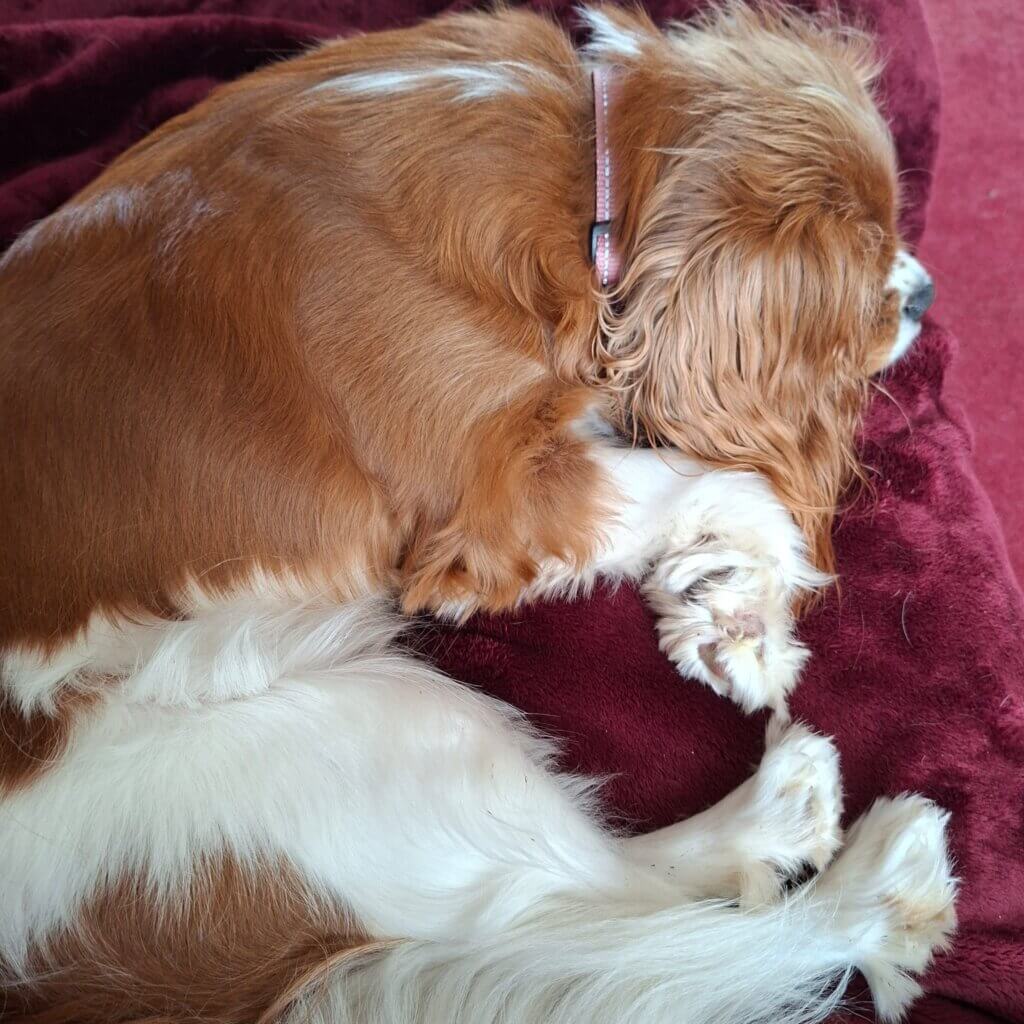
Alongside this, we introduced bed games indoors to build value in settling in one place before progressing to settle work in the garden.
Importantly, the later stages of settle training weren’t reliant on continually feeding Tiggy.
She was learning that sometimes nothing needed to happen.
And that is a really useful skill for an excitable adolescent dog.

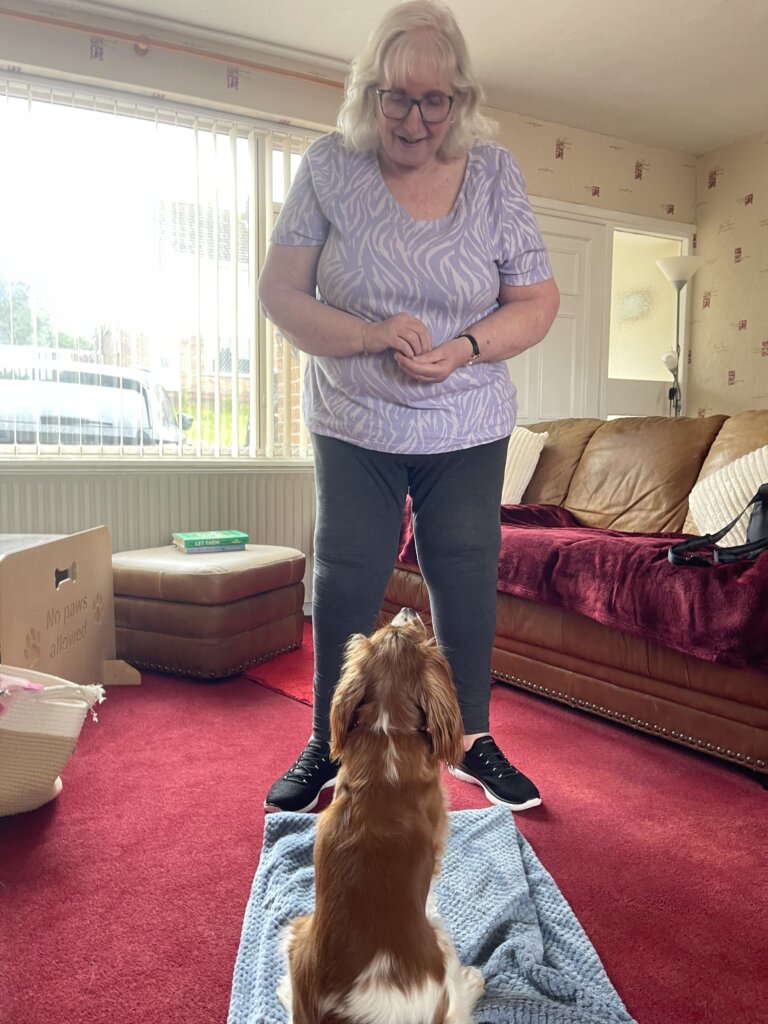
Solving Tiggy’s Toilet Training Problems
Toilet training was another of Jane’s original goals.
Rather than guessing when the accidents were happening, Jane kept a diary so we could identify any patterns.
We returned to the foundations, increased opportunities for Tiggy to toilet successfully outside and started putting toileting onto a cue.
The remaining accidents were resolved relatively quickly.
Sometimes adolescent toilet-training problems don’t require a complicated solution — we simply need better information about when and why they are happening and then a consistent plan.
Continuing Tiggy’s Training
When Jane and Tiggy returned to training after a break, the difference in Tiggy’s lead walking was already significant.
Jane had clearly put the work in.
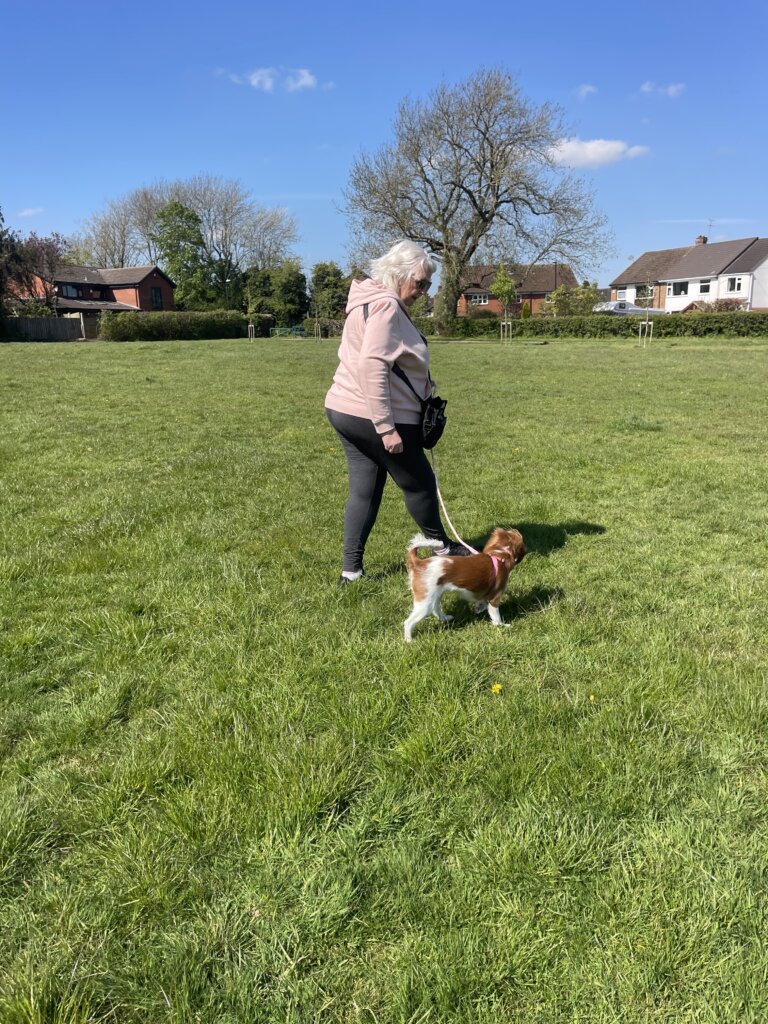
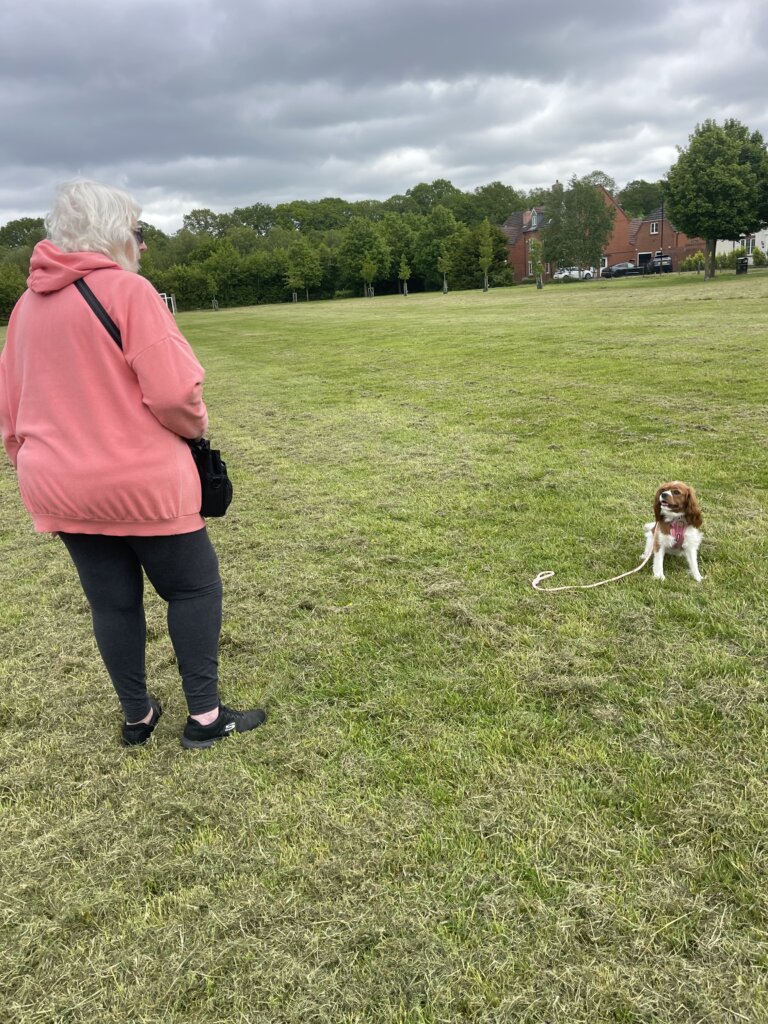
Tiggy was walking much more calmly beside her, checking in naturally and becoming increasingly able to ignore people and dogs rather than assuming she needed to greet them.
We were then able to build further skills, including recall, more relationship-building games and additional work around calmness and settling.
The aim was always the same: to give Jane and Tiggy useful skills that worked in everyday life, rather than training behaviours purely for the sake of training them.
Tiggy’s Progress in Everyday Life
Today, Tiggy can walk nicely alongside Jane and is much better at passing people and dogs without becoming over-excited.
Greeting is increasingly something that happens with Jane’s permission rather than something Tiggy automatically expects.
At home, she can go into the garden without charging straight through the door and racing off barking.
Jane and Tiggy can also spend time outside together much more calmly.
Her toilet training has been resolved, her ability to settle has improved and she has developed much better focus around distractions.
One of the nicest things for me has been seeing them out walking when I’ve been working locally with other clients.
I get to see the training when nobody knows I’m watching — Tiggy walking alongside Jane, checking in and calmly getting on with her walk.
And you can really see how much work they have both put in.
Client Testimonial
Jane left the following five-star Google review working together:
Carrie has been so knowledgeable about all aspects for training my puppy Tiggy especially during some personal difficulties. I cannot recommend Carrie highly enough for her support & patience.


More Than Teaching a Dog to Heel
Tiggy’s story is a lovely example of why dog training is rarely about fixing one isolated behaviour.
Her lead walking, excitement around visitors, behaviour around other dogs and difficulty settling might initially look like separate problems.
But many of them benefited from the same underlying skills:
learning to regulate excitement, becoming more engaged with Jane, making thoughtful choices and discovering that she didn’t need to respond to everything around her.
Jane hasn’t changed Tiggy’s lovely, sociable personality.
Tiggy is still Tiggy.
She has simply developed the skills to navigate the world with a little more calmness — and Jane now has the tools to help her when things do become exciting.
Project Outcomes
- Main Goals: Lead walking, visitor excitement and toilet training
- Lead Walking: Tiggy now walks calmly alongside Jane with much better engagement
- Dogs & People: Able to pass more people and dogs without automatically trying to greet them
- Visitor Training: A structured routine to reduce excitement when people arrive
- Toilet Training: Remaining accidents resolved
- Impulse Control: Improved ability to pause and make appropriate choices
- Settling: Able to relax much more successfully at home and in the garden
- Garden Behaviour: No longer routinely charging through the back door and racing down the garden barking
- Owner Skills: Increased understanding of body language, reinforcement, arousal and how to support Tiggy around distractions
121 Dog Training in Coventry
Tiggy didn’t need her enthusiasm for life trained out of her.
She needed help learning when to engage with the exciting things around her and when simply carrying on with her day was the better option.
That distinction can make an enormous difference for dogs who want to greet everybody, pull towards other dogs, become highly excited when visitors arrive or struggle to switch off at home.
My 121 dog training programmes are tailored around the individual dog in front of me, looking not only at the behaviour you want to change but also at what may be driving it.
If your dog finds the world a little too exciting, you can find out more about my 121 dog training in Coventry or get in touch to discuss how I can help.
Call: 07710 628449
Email: info@carriescanines.co.uk
Professional Credentials and Training Standards
Carrie’s Canines and Friends provides professional dog training in Coventry and surrounding areas, with programmes designed to support both dogs and their owners.
The training approach follows modern, reward-based methods and is supported by recognised industry credentials, including:
- IABTC Accredited Instructor
- SA Pro Behaviour Consultant
- Member of the Pet Professional Guild
- Ongoing professional development and education
Tiggy’s story shows how thoughtful 121 dog training can help an excitable adolescent dog learn to navigate everyday life more calmly, while also giving their owner the skills and confidence to support them.
Through her training, Tiggy learnt that she didn’t need to greet every person or dog, developed much better focus on Jane, improved her lead walking and learnt how to settle more successfully both at home and in the garden. Importantly, she has kept her lovely, sociable personality — she simply has more skills to manage all that enthusiasm.