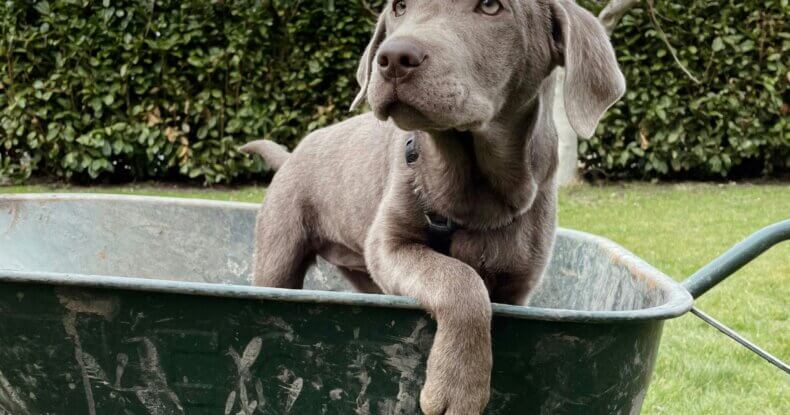
That sweet, eager-to-please puppy you knew… has vanished
One minute your dog is the perfect puppy, eager to learn and quick to respond. The next, they’re ignoring recall, no long doing that sit and testing every limit and pushing every boundary. If this sounds familiar, you might need teenage dog training — a tailored approach to help you through the tricky adolescent stage.
If your dog is around six months or older, welcome to adolescence — the teenage stage of doghood.
It’s normal, it’s temporary, and yes, it can feel a bit like living with a hormonal whirlwind.
For many of my clients, especially those with high-energy breeds like spaniels, doodles and their crosses, adolescence can feel like a full personality swap. But don’t worry. The skills you’ve already taught are still in there. They just need a little dusting off.

What is adolescence in dogs and why teenage dog training matters
Adolescence is the developmental phase between puppyhood and adulthood. It often starts between 6–12 months, depending on breed, and can last a few weeks to several months.
During this time, your dog’s hormones are in full swing. Their brain is rewiring itself, which can lead to:
- Reduced responsiveness to cues they once nailed.
- Increased independence (translation: selective hearing).
- Impulse-driven decisions, like chasing a bird instead of coming back.
I often use this analogy with clients:
Imagine an 18-year-old lad walking into a pub with his mates. It’s loud, full of bravado, maybe even a bit of chaos. Now imagine the same lad bumping into a calm, older man. Suddenly, the tone changes. That’s what adolescence is — a swirling mix of context, hormones, and emotion.
For more on canine development stages, the RSPCA has an excellent guide on puppy growth and behaviour.

Why has my puppy stopped listening? (Teenage dog behaviour explained)
If your puppy has suddenly started ignoring you, it’s not because they’re “being naughty” or “forgetting their training”.
Their brain is busy developing, hormones are surging, and they’re discovering the world with a new level of confidence (and distraction).
Spaniels, doodles and other gundog-type breeds often feel this change more intensely because they’re bred to notice and respond to their environment. The scent of a pheasant or the sight of another dog can suddenly become more rewarding than your recall cue, even if they’ve been perfect up until now.
How long does adolescence last in dogs?
It depends on the individual dog and their breed.
it can start from 6 months and last anywhere from a week to months. They hit adulthood approx 1 year old.
While the “peak” phase doesn’t last forever, it’s important to keep training consistent during this time so you don’t lose the good habits you built earlier.

Teenage dog training tips to survive the adolescent stage
Here’s what I recommend to clients who want to survive this stage with their sanity intact:
1. Go back to basics
If they’re acting like a tiny puppy, train them like one. Short, focused sessions. Clear expectations. Keep it simple.
2. Bring the rewards back out
Even if you’d phased treats out, this is the time to reintroduce them. Make listening to you worth it.
3. Manage the environment
If you know your dog will just ignore you at the park, don’t give them the chance to rehearse it. Use a long line until their skills are solid again.
4. Be consistent
Every walk, every interaction, every family member. Consistency now will pay off later.
5. Keep sessions short and fun
Especially with high-energy breeds. Leave them wanting more rather than bored or frustrated.
Common mistakes to avoid during teenage dog training
- Thinking they’re being ‘spiteful’ – they’re not. It’s development, not defiance.
- Letting training slide – stopping now will make it harder to regain later.
- Too much freedom too soon – it’s tempting, but it can undo progress.

When to get professional help with teenage dog training
If your teenage dog’s behaviour is causing stress, escalating into reactivity, or you’re unsure how to handle it, early professional support can make a huge difference.
In my 121 sessions across Coventry, Kenilworth and Leamington Spa (and online if you’re further afield), I work closely with owners to navigate this stage, especially those with spaniels, doodles and their crosses. Together we rebuild focus, reinforce recall, and restore calm.
Final thoughts
Adolescence isn’t forever. The training you’ve already done will come back. With patience, consistency, and a plan tailored to your dog, you’ll both get through this stage — and come out stronger for it.
Need help with your teenage dog?
Book your free 20-minute call today and let’s make a plan that works for you and your dog.
Want more help?
Link “puppy training in Coventry” to your Dream Puppy Programme page.
Link “121 sessions” to your 121 Dog Training page.