
Christmas is a lovely time of year, but it can feel overwhelming for many dogs. New decorations, visitors coming and going, changes to routine and the general excitement of the season all add up. Spaniels, Cavapoos, Cockapoos and other doodles in particular often find Christmas stimulating in all the wrong ways, especially if calmness isn’t something they naturally default to.
If you’re wondering how to start keeping your dog calm at Christmas, this blog walks you through practical steps to help your dog feel safe, settled and able to cope.
Why Christmas feels harder for dogs
Dogs thrive on routine and predictability. Christmas removes both. Suddenly the house looks different, the tree appears, the doorbell rings more often, and humans behave in ways they usually don’t. Even confident dogs can struggle if they aren’t prepared for these shifts.
For puppies, this might be their very first Christmas. Everything is new. Every sound is unusual. Puppies can go from excited to overwhelmed quickly, and many owners misread this as naughtiness rather than stress. If your puppy is biting or mouthing more at this time of year, this blog will help:
Puppy Biting Blog

Create a calm space for your dog
One of the most important steps in keeping your dog calm at Christmas is giving them somewhere to retreat to.
This could be:
- A crate (if they already use one)
- A quiet room
- A gated area away from guests
- A comfy bed in a low-traffic space
If your dog already struggles with separation or finds being away from you difficult, this page has more guidance:
Separation Anxiety Programme
Choice reduces overwhelm. Calmness grows from feeling safe.
Use enrichment to promote calmness
Chewing and licking help lower heart rate and release calming hormones. These tools are essential at Christmas when arousal levels naturally rise.
Useful options include:
- Long-lasting natural chews
- Kongs
- Licki mats
- Scatter feeding
- Sniffing games
If your dog becomes overexcited outdoors, this can link to poorer listening and recall. You may find this blog helpful:
Recall Regression Blog
Puppies may prefer softer chews due to teething discomfort, so always adjust based on what they can comfortably manage.

Keep routines as close to normal as possible
Dogs feel secure when their world makes sense. Christmas tends to disrupt the predictable order of the day, so maintaining small pieces of routine helps enormously.
Try to keep:
- Walk times consistent
- Mealtimes steady
- Sleep opportunities protected
- Toilet breaks predictable
- Training sessions short and regular
Walks benefit owners too, particularly around a time when we’re eating and resting more. A steady walk after dinner helps reset everyone’s energy levels.
If you missed my blog on helping dogs cope during fireworks — another high-arousal period — you can read it here:
Fireworks Blog
Managing visitors without overwhelm
Even social dogs can find visitors overstimulating. Puppies often go from biting to jumping to zooming within minutes when guests arrive because they simply don’t know how to cope.
Support your dog by:
- Allowing distance when needed
- Letting them observe rather than interact
- Using a lead for guidance around the door
- Rewarding calm behaviour
- Asking visitors to ignore your dog initially
Never force interaction. Choice builds confidence.
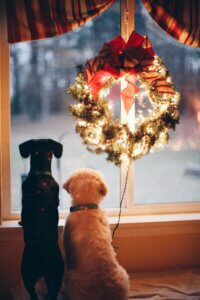
Christmas trees, decorations and household changes
Dogs notice environmental changes immediately. Decorations can be exciting or worrying, especially if they move, sparkle or make noise.
Consider:
- Hanging decorations higher if you have a puppy
- Keeping wires from lights safely tucked away
- Avoiding edible presents under the tree
- Supervising closely in the first few days
- Blocking access to tree water (if using a real tree)
More safety advice on Christmas hazards for dogs is available here:
Blue Cross Christmas Dangers
Poinsettias, mistletoe and holly berries are toxic, so place them out of reach.
A section just for puppies
Puppies need far more sleep than most owners realise, often up to 18 hours in a 24-hour period. Christmas excitement quickly tips puppies into overtiredness, which leads to biting, zoomies and difficulty settling. Again, this ties into the advice in my puppy biting guide if you’re seeing an increase in behaviour:
Puppy Biting Blog
Support young puppies by:
- Building in extra naps
- Keeping visits short and calm
- Rotating enrichment
- Practising short settle sessions
- Supervising closely around trees and presents
Gentle exposure is key — never overwhelm a puppy with too much at once.

Myth-busting calmness
A common misconception is that dogs need more exercise to calm them down. In reality, more physical exercise can increase adrenaline rather than reduce it.
What genuinely builds calmness is:
- Predictable routines
- Consistent sleep
- Short, focused training
- Sniffing and searching
- Time away from stimulation
Calmness is created through structure, not exhaustion.
If you’d like support with calmness or puppy life
If you’re finding this period challenging, especially with a spaniel, doodle or busy adolescent dog, support is available.
- Dream Puppy Programme: For settling routines, early training, calmness foundations and first-Christmas support.
- Dream Dog Programme: Ideal for adolescent dogs struggling with excitement, visitors or household changes.
- 121 Dog Training in Coventry, Kenilworth and Leamington Spa for tailored help.