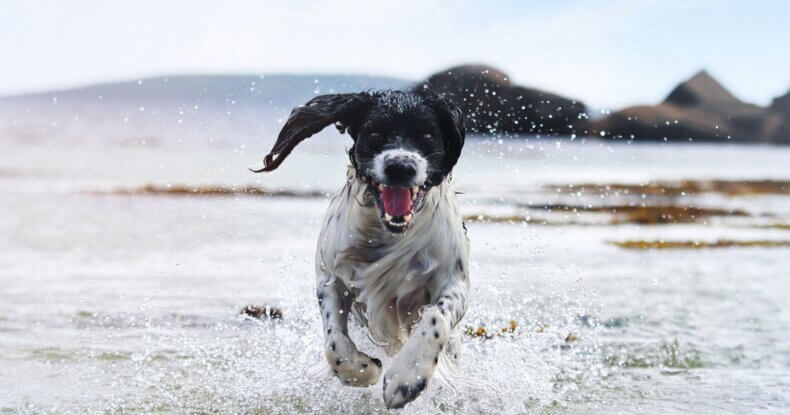
If your dog’s recall is perfect at home but unreliable outdoors, you’re not alone. Many of the dogs I work with in Coventry, particularly Spaniels, Cavapoos, Cockapoos and doodle mixes, struggle to come back when distractions kick in. This guide will help you understand why recall breaks down and give you a simple step-by-step plan to rebuild it.
If you’ve been searching for dog recall training that actually works in real life, here’s how to start.
Why recall training often fails
Think of recall like trying to hold a conversation in a quiet café versus a busy pub. Most dogs can “hear you” in the café. In the pub, the environment wins.
Common reasons recall fails:
- Too much freedom too soon. Parks full of smells, squirrels and other dogs are the ultimate distraction.
- Weak reinforcement history. If coming back means the lead goes on and the fun stops, your dog will think twice.
- Rehearsed ignoring. Every time your dog doesn’t come when called, that behaviour gets stronger.
- Mixed messages. Sometimes you call once, sometimes five times. Sometimes there’s a reward, sometimes not.
- Over-arousal. Many Spaniels and doodles get so excited they physically can’t focus.
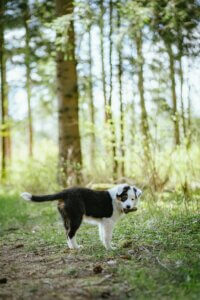
Breed spotlight: Spaniels and doodles
These breeds are clever, curious and full of energy — wonderful traits, but they can make recall harder.
- Spaniels follow their nose and often switch to “hunt mode.”
- Cavapoos, Cockapoos and doodles love people and other dogs, which can easily outweigh the value of coming back.
The solution isn’t shouting louder. It’s structured dog recall training that makes returning to you the best decision your dog can make.
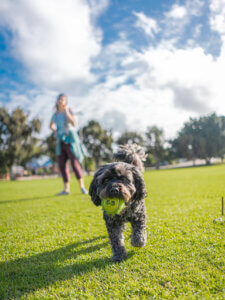
Step-by-step recall training plan
1. Manage first, train second
- Use a long line and harness so your dog can’t practise running off.
- Choose quieter places to start — empty fields or quiet paths — before working up to busier areas.
2. Build engagement before calling
- Play a “Check-In” game on every walk. Each time your dog glances at you, mark and reward.
- This builds the habit of paying attention even before you say their name.
3. Teach a fresh recall cue
- Pick a new word or whistle.
- Start indoors. Say the cue once, run away, reward any movement toward you.
- Add excitement — move away, clap, cheer. Dogs chase movement.
- Reward at your feet to start, not halfway back.
4. Make coming back worth it
- Coming back should start fun, not end it.
- Give a treat party, a quick tug, or release them back to sniff.
5. Use an environment ladder
Only move up when you’re getting 8 out of 10 reliable recalls:
- Indoors
- Garden
- Quiet field
- Empty park
- Busier area with mild distractions
- Full park environment
6. Reward smartly
- Spaniels love sniff games — use “Find it” as a reward.
- Doodles love social contact — reward with “Go say hi” if safe to do so.
- Mix high-value food, play and freedom.
7. Keep sessions short
- Short, upbeat and successful.
- End before your dog switches off.
Real story: Penny the Doodle
When Penny first joined my dog recall training, her owners couldn’t get her back once she’d spotted another dog. We introduced a long line, new whistle cue, and made recall part of her play. Within weeks, her recall was instant, and her focus and loose-lead work improved too.
‘Penny is a Sproodle (springer spaniel/poodle) very lively, loves dogs and people a bit too much. Group training was not for us too many distractions meant Penny couldn’t listen. Working with Carrie has transformed Penny. I have been trained well in how to communicate effectively. Penny listens to me most of the time. She walks without pulling. Carrie has built my confidence and I can let Penny off lead. We both enjoy our time together without stress. I highly recommend the services Carrie offers, very good value, bringing positive results.’
Now she happily checks in on walks, knowing that coming back often leads to another chance to play or greet.
Common recall mistakes to avoid
- Calling when you know they won’t come.
- Repeating the cue again and again.
- Only rewarding when you’re ready to go home.
- Forgetting that dogs need practice at different difficulty levels.
Engagement games to boost recall
- Ping-Pong Recall: Two people take turns calling your dog back and forth, rewarding each time.
- Middle: Teach your dog to pop between your legs on cue — a brilliant safety cue.
- Find It: Scatter a few treats, let them sniff them out, then recall off the last one.
What if your dog is anxious or reactive?
If your dog struggles with noises, other dogs or new environments, we adjust recall training to build confidence first. We start in low-stress areas, focus on safety and success, and gradually layer in challenge.
That’s exactly what we cover in my Dream Dog Programme — structured 121 training that helps you rebuild trust, focus and recall in real-life settings.
Quick recap checklist
- Long line and harness
- New recall cue or whistle
- High-value rewards
- Easy environment to start
- Release back to fun
- Keep it consistent and light-hearted
Ready to transform your recall?
If you want your Spaniel or doodle to come flying back the first time you call, my Dream Dog Programme offers one-to-one dog recall training around Coventry, Kenilworth and Leamington Spa.
Start your dog’s journey here: Dream Dog Programme – Dog Recall Training
You can get started right away with my Top 3 Step to Stop your Spaniel or Doodle going ‘self employed’ here
