Date of Project: March–June 2026
Type of Client: Reactive dog owner
Client/Project Name: Damien, Helen & Autumn
Project Location: Leamington Spa
Service Provided: Eight-week Reactive Dog Programme followed by two additional support sessions
Helping a Nine-Year-Old Terrier Feel Calmer at Home and on Walks
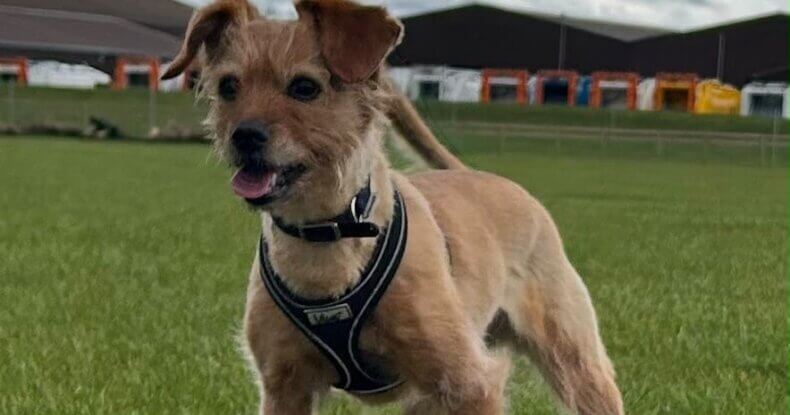
Autumn was nine years old when Damien first contacted me for help.
A small crossbreed terrier, Autumn was struggling both at home and out on walks.
Around other dogs, she could growl, curl her lip, bark and lunge forwards. At home, barking could become intense around people arriving or leaving, and sometimes continue for a long time afterwards.
She was also finding nighttime separation difficult.
Autumn had previously been used to having more freedom around the house, but following changes in the household and environment, she was now spending the night downstairs. She could become distressed, pacing, panting, toileting indoors and becoming destructive around the door.
Damien wanted Autumn to feel calmer.
Not just quieter, but genuinely more settled both at home and when she encountered other dogs.
Understanding What Was Driving Autumn’s Behaviour
When working with reactive dogs, I don’t begin by asking how we can stop the barking or lunging.
I want to understand why it is happening.
For Autumn, there were several things contributing to her overall stress.
She could become highly aroused around arrivals and departures, struggled when left downstairs overnight and found encounters with other dogs difficult.
We talked about the idea of a stress bucket: all the little stressful or exciting experiences a dog has throughout the day can add up.
Once that bucket becomes too full, even something relatively small can tip the dog over into a much bigger reaction.
We also looked at the different ways dogs can respond when they feel uncomfortable or threatened — often described as the four Fs:
- fight
- flight
- freeze
- fool around
Autumn’s barking, growling and lunging around dogs were important communication.
Rather than punishing those warnings, we needed to listen to them and help her feel differently about the situation.
Moving Away From Suppressing the Barking
Damien had previously tried a vibration collar in an attempt to reduce the barking.
We talked through why I don’t recommend this approach.
Stopping the outward behaviour doesn’t necessarily change how the dog feels.
If a dog is barking because they are worried, frustrated or overwhelmed, suppressing the bark can remove the communication without addressing the emotion underneath it.
Instead, we focused on giving Autumn alternative behaviours and changing the situations that were causing her difficulty.
Creating More Calmness at Home
One of the first areas we worked on was Autumn’s barking around arrivals and departures.
This was something Damien and the family had struggled with for a long time.
We introduced a simple plan.
When someone left the house, Autumn was given something different to focus on.
Depending on who was leaving, this might involve:
- a scatter of food as Damien went through the front door
- a stuffed Kong
- another food scatter if needed
- scent-based activities
We did similar work when people arrived.
Instead of allowing Autumn to remain fixed on the doorway and continue barking, Damien could acknowledge her with a calm “thank you” and then scatter food away from whatever she was barking at.
This gave Autumn something else to do and helped break the cycle of repeatedly returning to the trigger.
The improvement came surprisingly quickly.
Damien described it in his review as a “nice win very early on” after they had struggled with the behaviour for a long time.
Tackling Attention Barking
Autumn could also direct a lot of barking towards Damien.
With attention barking, it is very easy to accidentally reinforce the behaviour.
We look at the dog.
We speak to them.
We tell them to stop.
We move towards them.
From Autumn’s perspective, barking had worked — she had got interaction.
So Damien learnt when to avoid reinforcing the barking and, importantly, how to notice and reward the calmer behaviour he wanted instead.
This helped Autumn begin to discover that being settled and quiet could be rewarding too.

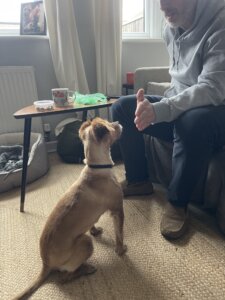

Using Enrichment to Support Calmness
We also looked carefully at Autumn’s day-to-day routine.
The goal wasn’t simply to exercise her more.
Physical exercise has its place, but dogs also benefit hugely from appropriate mental stimulation and opportunities to use natural behaviours.
We introduced:
- natural chews
- stuffed Kongs
- LickiMats
- scent games
- scatter feeding
- short training sessions
- enrichment activities from my online resources
In one of our early sessions, we also taught Autumn some new behaviours simply to give her brain something constructive to work on.
Mental stimulation can be incredibly useful for dogs who struggle to switch off.
The aim was to create a home routine where Autumn had appropriate things to do and more opportunities to decompress.
Supporting Autumn’s Nighttime Separation
Nighttime was another significant challenge.
Autumn was expected to sleep downstairs but could become very distressed.
There had been nights involving repeated waking, pacing, panting, toileting and scratching or becoming destructive around the door.
Rather than leaving her to remain distressed, we worked on helping her settle gradually.
First, we made sure Autumn’s needs had been properly met during the day so she was in the best possible position to relax at night.
Then, when she became unsettled, Helen could come partway down the stairs and use her voice to reassure Autumn without immediately going all the way downstairs and restarting the whole nighttime routine.
If Autumn became unsettled again, the process could simply be repeated.
It required patience and repetition, but Autumn gradually became more comfortable.
She is now able to sleep downstairs again.
That was a huge change for the household.
Understanding Autumn’s Reactivity Around Other Dogs
Outside the home, our biggest goal was helping Autumn feel safer around other dogs.
One of the most important things Damien learnt was the role of distance.
A dog may react strongly at five metres but be perfectly capable of seeing and processing another dog from twenty metres away.
That distance isn’t failure.
It is the place where learning can happen.
We began far enough away from other dogs that Autumn could notice them without immediately barking or lunging.
From there, we paired the sight of another dog with something positive.
Dog appears = good things happen.
Food wasn’t being used to distract Autumn from another dog.
We were working to change the emotional association.
Instead of another dog automatically predicting worry or conflict, the appearance of a dog began to predict something positive.
Gradually Building Autumn’s Confidence
We didn’t rush to get closer.
As Autumn became more comfortable, we could gradually reduce the distance between her and other dogs while still keeping her under threshold.
If she struggled, we created more space again.
The priority was always Autumn’s emotional state rather than how close we could physically get.
We also talked about the importance of giving reactive dogs days off.
They don’t need to practise difficult dog encounters every single day.
Sometimes the most useful thing for a dog’s stress levels is a quiet day with decompression, sniffing and fewer challenges.
Over time, Autumn’s confidence around dogs increased significantly.
She became increasingly able to see other dogs, remain calmer and move past them without the barking and lunging that had previously made walks so difficult.
From Reactive Walks to Walking Past Dogs in the Park
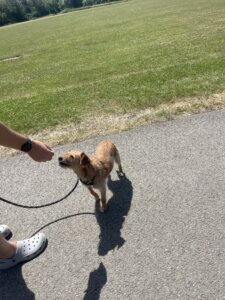
One of the biggest real-life outcomes is that Autumn can now successfully walk past other dogs in parks.
For Damien, that makes everyday walks considerably easier.
But there was another milestone too.
Autumn’s brother, Jimmy, was gradually reintroduced to their walks.
Previously, managing Autumn’s reactions meant Damien couldn’t comfortably walk both dogs together.
As Autumn became calmer and more confident, Jimmy could join them again.
Damien is now able to walk both dogs together.
That is exactly the type of progress I want from behaviour work.
Not perfection.
Not a dog who never communicates.
But meaningful changes that make everyday life better for both dog and owner.


A Calmer Household
The changes weren’t limited to walks.
Autumn became noticeably calmer at home too.
Arrivals and departures became easier to manage.
Her attention barking reduced.
She developed better ways to settle.
Her nighttime separation improved to the point where she could sleep downstairs again.
And the household became much quieter and more relaxed.
Damien had originally wanted a calmer, less vocal dog.
By the end of our work together, that was exactly the change he was seeing.
Client Testimonial
Damien left the following five-star Google review after working together for around three months:
“Engaged the help of Carrie to work on training my reactive 9yr old terrier, both at home and in public.
Carrie was great with my dog from the off, offering loads of support, resources and training tips for us to work on. For example, a change of diet and some easy training tips for us when leaving the house saw a big increase in calmness for our dog. A nice win very early on, with something we’d struggled with for ages 😃
Carrie worked with my dog and I for about 3 months in total, not every week, sometimes a couple of weeks apart, but I can genuinely say I’ve seen massive progress, and the training was fun for my dog and I, and a long term benefit.
Would recommend Carrie to anyone thinking of dog training, it was a brilliant thing for my dog to do and I feel like I got the results I was looking for in a calmer and less vocal dog.
10/10 for Carrie 🤩”
Project Outcomes
- Programme: Eight-week Reactive Dog Programme plus two additional sessions
- Starting Age: Nine years old
- Breed: Crossbreed terrier
- Location: Leamington Spa
- Dog Reactivity: Reduced barking, growling and lunging around other dogs
- Confidence: Able to pass dogs much more successfully in parks
- Walks: Jimmy successfully reintroduced and Damien can now walk both dogs together
- Home Barking: Significant reduction around arrivals, departures and attention-seeking
- Settling: More calmness in the home through enrichment, training and predictable routines
- Nighttime Separation: Autumn is now able to sleep downstairs
- Owner Understanding: Greater awareness of stress, body language, distance and how to support Autumn before she reaches the point of reacting
- Client Satisfaction: Five-star Google review and “massive progress” reported
Professional Credentials and Training Standards
Carrie’s Canines and Friends provides professional puppy and dog training in Coventry and surrounding areas, with programmes designed to support both dogs and their owners.
The training approach follows modern, reward-based methods and is supported by recognised industry credentials, including:
- IABTC Accredited Instructor
- SA Pro Behaviour Consultant
- Member of the Pet Professional Guild
- Ongoing professional development and education
This case demonstrates how thoughtful 121 puppy training in Coventry can support both the puppy’s development and the owner’s confidence from the very beginning.
Through the Dream Puppy Programme, Prince’s early biting, sleep and routine challenges became much easier to manage, while Emma and Richard built strong foundations in recall, socialisation, play, impulse control and everyday life skills.
Helping Reactive Dogs Feel Safer
Autumn’s story shows why successful reactivity training isn’t simply about stopping barking or lunging.
Those behaviours are information.
By understanding what Autumn was communicating, giving her more distance when she needed it and gradually changing how she felt about other dogs, we were able to build genuine confidence rather than simply suppressing the reaction.
The same principle applied at home.
Instead of repeatedly correcting Autumn for barking, we gave her clearer routines, alternative behaviours and more appropriate ways to cope with the things she found difficult.
The result was a dog who became calmer both at home and out in the world.
Reactive Dog Training in Leamington Spa & Warwickshire
If your dog barks, lunges or struggles around other dogs, the goal doesn’t have to be forcing them closer or teaching them simply to tolerate situations they find overwhelming.
My Reactive Dog Programme focuses on understanding why the behaviour is happening, recognising your dog’s body language and gradually building confidence at a pace they can cope with.