Puppy Food Transition
So, you’ve bought the bag.
You’ve checked the label.
You’re now wondering how to switch puppy food without causing tummy trouble…
You’ve realised it’s full of maize, cereals and “meat meal” (whatever that is).
Now you’re ready to switch to something better but you’re worried about upsetting your puppy’s tummy. Or maybe you’ve already tried switching and now you’re knee-deep in soft poo and regret.
Sound familiar?
You’re not alone and the good news is, switching your puppy’s food doesn’t have to be a digestive disaster.
In fact, if your dog is young and healthy, it’s often easier than you think.
🚫 Let’s bust the 7-day switch myth
You’ve probably read that you need to take 7 full days to change your dog’s food.
But here’s the truth: that’s a guideline pushed by most food manufacturers not always based on your individual dog’s needs.
If you’ve got a young, healthy puppy who’s used to variety, you can often switch more quickly, especially if the new food is better quality.
I’ve got three dogs myself, all of whom eat a mix of different foods. If I switch between three brands of kibble, none of them get an upset tummy because they’ve been used to variety from the start.

🔄 When slow switching is important
There are times when the gradual approach really matters:
🐶 Older dogs who’ve eaten the same food for years (10+ years of one brand = very sensitive gut)
🐾 Puppies who’ve already had digestive issues
🐕 Dogs with known intolerances or allergies
If you’re unsure, always err on the side of caution and go slowly over 5–7 days.
That might look like:
75% old / 25% new for 2 days
50/50 for 2–3 days
Then 75% new / 25% old before a full switch
But if your puppy’s generally healthy? You can usually be a little braver than the packaging suggests.
If you’re still unsure how to switch puppy food, don’t overthink it — your puppy will usually tell you how they’re feeling through their energy, appetite and poos.
😋 Fussy eaters & finding the right fit
Some pups aren’t “fussy” they just don’t like what they’re being offered.
I had a client whose puppy was barely eating their kibble. We changed them to a gently cooked food (Different Dog), and it was a total game-changer. No more coaxing. No more leaving food. They actually enjoyed eating again.
💡 Budget-friendly tip:
Cooked food can be expensive, so if a client likes the idea of it but can’t afford a full switch, I often suggest a 50/50 bowl— half kibble, half cooked food.
I do this with my own dogs. Eric gets kibble in the morning and Butternut Box or Different Dog in the evening.
If you’re considering cooked food, Butternut Box and Different Dog are two I regularly recommend — and I’ve got discount codes available for both if you’d like to give them a try.

🧀 What not to do when switching food
✋ Stop trying to “trick” your puppy into eating their food by piling cheese or ham on top.
I know it’s tempting, but it often backfires. Puppies learn to pick out the cheese and ignore the kibble entirely.
🔑 Add extras once they’re eating confidently, not to bribe them into trying something they clearly don’t like.
Feeding your puppy doesn’t have to be perfect — it has to be realistic. It’s about feeding what you can afford, and what works for your dog and your lifestyle. Whether that’s kibble, cooked food, or a 50:50 mix, your dog needs to enjoy it and thrive on it.
If you’re unsure where to start or want to compare brands, you can use All About Dog Food to see ingredients, ratings and prices. Just pop in your budget and your dog’s details — it’s a really helpful tool, although it can feel a bit overwhelming at first!
💩 What’s normal (and what’s not)
When switching food, you might see:
✅ Slightly looser stools for a day or two
✅ Slight variation in poo colour or smell
❌ Ongoing diarrhoea for more than 3 days
❌ Lethargy, vomiting, or totally refusing to eat
If your puppy has ongoing tummy upset, it’s time to pause, go back a step, or check with your vet.
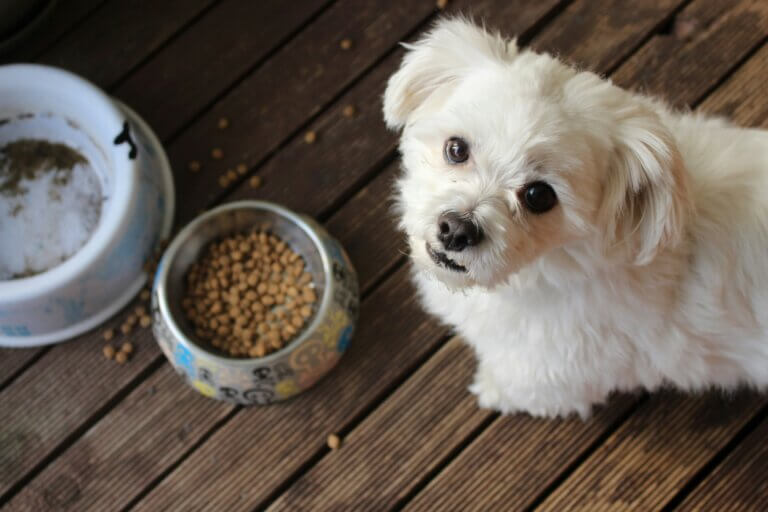
✅ My top tips for a smooth food transition
✔️ Feed new food at quiet times (not just after a wild walk or big play session)
✔️ Keep mealtimes calm and consistent
✔️ Offer food, then remove it after 10–15 minutes (no grazing!)
✔️ Don’t mix in high-value toppings unless your puppy is already eating well
✔️ Always have water available, especially with dry food
💬 Real-life example:
One of my clients switched their 11-week-old puppy from a supermarket brand to a higher-quality kibble. We did it over 3 days — and not only did their pup take to it straight away, but they also told me:
“He’s calmer, he’s focusing more in training… and his poos are way more predictable!”
That’s the power of better nutrition and the right switch strategy.
🐕 Conclusion
Switching your puppy’s food doesn’t have to be a drama.
Get the timing right, go at their pace, and trust your instincts.
And if you need someone to help you figure out if a food is worth sticking with? I’m here.
Want More Help?
Need tailored help with how to switch your puppy’s food? I cover this in every 121 Dream Puppy Programme
I cover nutrition, feeding, and calm mealtime habits in my Dream Puppy Programme, because what your puppy eats absolutely affects how they behave.
Want to learn more?
How to Read Dog Food Labels Like a Pro