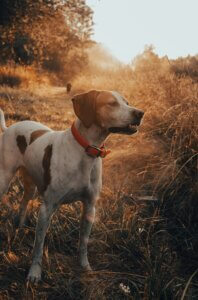
Scent work for dogs is one of the best ways to provide meaningful mental enrichment.
Have you ever come home after a long walk only to find your dog racing around the house as though they haven’t been out at all?
It’s something I hear from owners all the time.
“I’ve walked them for over an hour. Why are they still full of energy?”
The natural response is often to think they need an even longer walk tomorrow. But the answer isn’t always more physical exercise.
Sometimes, what your dog really needs is the opportunity to use the most incredible tool they have… their nose.
Why Scent Work for Dogs Is So Powerful
As humans, we rely heavily on our eyesight.
Dogs don’t.
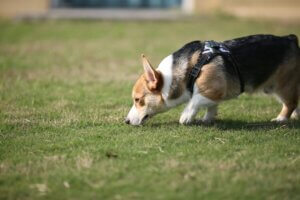
They experience so much of their world through their nose.
While we’re noticing the scenery, our dogs are discovering who walked past this morning, which wildlife crossed the path overnight, whether another dog was feeling confident or worried, and countless other pieces of information we can’t even begin to imagine.
Sniffing isn’t your dog getting distracted.
It’s how they make sense of the world.
When we constantly hurry them along because we want to keep walking, it’s a bit like someone closing a book while we’re still trying to read it.
Why sniffing is so mentally tiring
Walking and sniffing might look similar from the outside, but they’re completely different activities.
Walking mainly exercises your dog’s muscles and cardiovascular system.
Sniffing exercises their brain.
Every scent your dog investigates requires them to process information, make decisions and solve problems. They’re constantly analysing tiny scent particles and working out what they mean.
Think about the difference between strolling around a shopping centre and completing an escape room.
Both involve moving around.
Only one demands intense concentration.
For your dog, sniffing is much closer to solving the escape room.
It’s one of the reasons why many dogs come home from a sniffy walk looking far more settled than they do after simply covering lots of miles.
Scent work for dogs isn’t just about sniffing. It’s one of the most effective ways to provide mental enrichment while building confidence and focus.
More walking isn’t always the answer
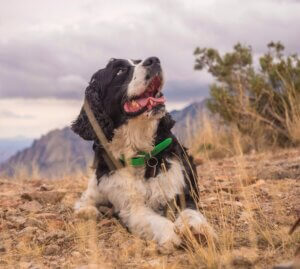
Many owners believe that if their dog still has energy, they simply need more exercise.
In reality, continually increasing physical exercise often creates a fitter dog rather than a calmer one.
That’s especially true for energetic breeds such as spaniels, Labradors, collies and many doodles. Their natural instincts, motivation and energy levels are some of the things I consider within my breed-specific dog training.
The missing piece is often mental stimulation.
When dogs have opportunities to think, investigate, solve problems and use their natural instincts, they’re often more relaxed afterwards because one of their behavioural needs has been fulfilled, not simply because they’re physically exhausted.
For me, that’s a much more meaningful goal than trying to wear a dog out.
Your dog’s nose is one of their greatest superpowers
Every dog has an incredible sense of smell.
Some breeds may naturally have a stronger drive to follow scent, but every dog can enjoy using their nose.
When we give dogs permission to do what they were designed to do, something really special happens.
They become purposeful.
Focused.
Confident.
Rather than fighting against your dog’s desire to sniff, we can work with it. Working with the individual dog and helping them use their natural abilities positively is central to my approach to dog training.
That’s exactly why I’ve become so fascinated by tracking. You can read more about why longer walks are not always the answer in my guide to Track & Trail classes in Coventry.

Why I love Track & Trail
I’ve been fascinated by tracking for a long time.
Watching a dog work independently, using nothing but their nose to solve a problem, is incredible to watch.
What I love even more is watching the owner.
You can almost see the moment everything changes.
They stop seeing a dog that’s simply pulling towards smells and start seeing just how remarkable their dog really is.
It’s not about teaching the dog to follow a scent.
It’s about teaching the owner to understand what their dog is telling them.
As owners begin reading their dog’s body language, recognising when they’re confidently on the scent and seeing them solve problems independently, the relationship between them grows stronger.
You’re no longer working against your dog’s instincts.
You’re working together.
One day I’d also love to train in lost dog tracking, where trained dogs help locate missing dogs using scent. It’s something that really fascinates me and is firmly on my list for the future. For now, I’m incredibly excited to introduce local owners to the wonderful world of Track & Trail through my new classes.
Why Track & Trail is about so much more than tiring your dog out
People often ask me if Track & Trail is simply another way of burning energy.
The answer is no.
It’s about fulfilling your dog.
Tracking allows dogs to use natural behaviours in a structured way.
They concentrate.
Problem solve.
Make decisions.
Work as a team with their owner.
For many dogs, that’s every bit as rewarding as the destination at the end of the trail.
It’s also why tracking can be such a brilliant activity for many reactive dogs. Rather than worrying about everything happening around them, they have a clear job to focus on. Dogs work one at a time, making it an activity that many reactive dogs can enjoy successfully.
If your dog regularly barks, lunges or struggles to cope around other dogs or people, you can also learn more about my reactive dog training in Coventry.
A simple game to try at home
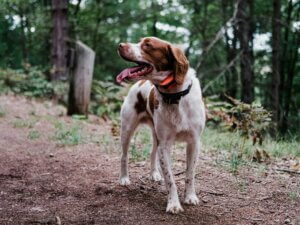
If you’d like to encourage your dog to use their nose more, here’s a simple activity you can try today.
Scatter a handful of your dog’s kibble or a few treats into the grass in your garden.
Then stand back.
Don’t point.
Don’t help.
Just let your dog search.
Watch how they move.
Notice how carefully they investigate.
Pay attention to how much concentration they’re using.
You might be surprised at just how content they seem afterwards.
Sometimes five minutes of meaningful sniffing can be far more fulfilling than adding another lap of the park.
Enrichment doesn’t have to involve expensive toys or hours of exercise. Allowing your dog to sniff, explore and engage with their environment is a valuable form of mental stimulation. You can also explore my online dog training courses for more activities and training support you can work through at home.
The Kennel Club & Dogs Trust both highlights the importance of enrichment activities that encourage dogs to use their natural behaviours.
The Kennel Club – Enrichment for dogs
https://www.thekennelclub.org.uk/dog-training/getting-started-in-dog-training/enrichment-for-dogs/
Dogs Trust – Enrichment for dogs
https://www.dogstrust.org.uk/dog-advice/life-with-your-dog/at-home/enrichment
Ready to discover what your dog is truly capable of?
If you’ve never tried tracking before, my new Track & Trail Introduction Course is designed for complete beginners.
Over four weeks, you’ll learn how to work with your dog’s incredible sense of smell, understand their body language on the track and build an even stronger partnership together.
Whether you have a spaniel, a doodle, a Labrador, a terrier or a rescue crossbreed, every dog has the ability to track.
Sometimes they just need someone to show their owner what they’re capable of.
If you’d like to find out more about my Track & Trail classes around Coventry, Kenilworth and Leamington Spa, I’d love to welcome you and your dog onto one of the Introduction Courses.