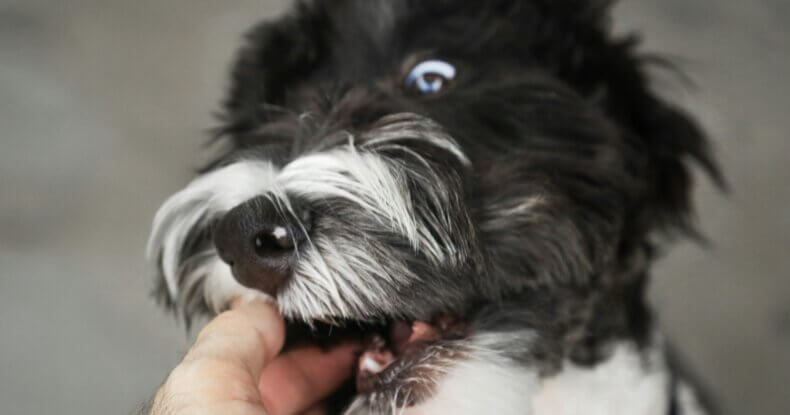
If you’ve found yourself wondering why is my puppy biting me so much, you are not alone. Almost every puppy owner I work with in Coventry, especially those with Spaniels, Cavapoos, Cockapoos and other doodles, goes through this stage. It can feel intense and overwhelming, and sometimes quite upsetting. I often hear owners say things like, “My puppy hates me” or “All they do is bite.”
Here is the reassuring truth.
Puppy biting is completely normal. It doesn’t mean your puppy dislikes you, is trying to dominate you, or is becoming aggressive. In fact, it’s usually the opposite. Puppies bite because they feel safe with you and want to interact. Your job isn’t to stop the biting completely, but to teach them what is appropriate to put their teeth on and what isn’t.
Why puppies bite
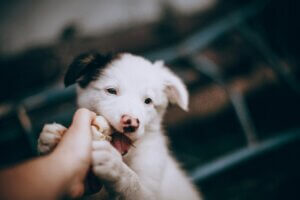
Puppies explore the world using their mouths. Biting is how they investigate, play, seek attention and manage rising emotions. If your puppy keeps biting you, it’s often because they like you and want to engage with you.
There’s a common myth that puppies bite because they are being dominant or testing boundaries. This simply isn’t true. Biting at this stage is developmental, not behavioural.
Spaniels, Cavapoos, Cockapoos and doodles can be especially mouthy because they are clever, socially driven and easily overstimulated. Their enthusiasm often comes out through their teeth.
Why it often gets worse around four and a half to five months
Many owners feel they’ve made progress, only for biting to suddenly intensify again around 18 to 20 weeks of age. This can feel like you’re going backwards, but it’s completely normal.
This stage is usually driven by a combination of things:
- Teething discomfort as adult teeth start to move through
- Increased confidence and independence
- Reduced sleep as routines change
- Higher arousal levels, particularly in working and social breeds
This isn’t a behavioural problem. It’s another developmental phase that needs thoughtful support.
Sleep matters more than you think
One of the biggest drivers of puppy biting is lack of sleep. Young puppies need around 18 hours of sleep in every 24-hour period. When they don’t get enough rest, they become impulsive, irritable and far more bitey.
Signs your puppy may be overtired include increased nipping, difficulty settling, sudden bursts of craziness and biting that escalates very quickly.
If your puppy struggles to switch off during the day, support with settling and rest can make a huge difference. I’ve written more about this in my puppy sleep and crate training guidance, which you can read here:
Puppy sleep and crate training support
Chewing isn’t just for teething
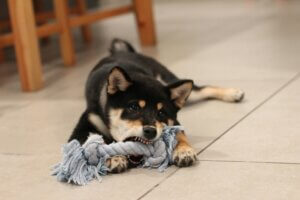
Chewing plays a vital role in helping puppies regulate themselves. It releases calming endorphins, helps relieve jaw tension and can support better sleep if used at the right times.
Natural chews that work well for many puppies include:
- Pizzles
- Rabbit ears
- Lamb skin or lamb braids
- Tripe sticks
- Yak cheese (for stronger chewers)
- Softer chews for sore mouths during teething
Aim for chews that last around 20 minutes to allow enough time for your puppy to fully relax. Avoid cooked bones, as these are unsafe and can splinter.
If you’re unsure which chews are appropriate at different ages, I’ve shared a full breakdown in my natural chews guide, which you can read here:
Natural chews for puppies
Frozen enrichment for sore mouths
Alongside chews, cold enrichment can be incredibly helpful during teething.
Good options include:
- Frozen Kongs
- Frozen lick mats
- Cold carrot or cucumber sticks
These are soothing for sore gums and can help redirect biting in a calm, positive way.
The tea towel trick that still works
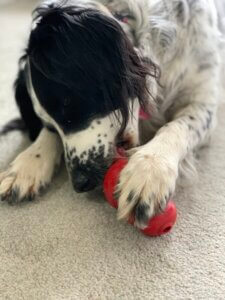
This is an old-fashioned trick that I still recommend because it works so well. Take a clean tea towel, tie a few loose knots in it, soak it in bone broth and freeze it.
The cold temperature, soft resistance and movement are ideal for puppies who don’t want hard chews while teething. For many puppies, this can be a real lifesaver during peak biting phases.
Redirecting biting without making it worse
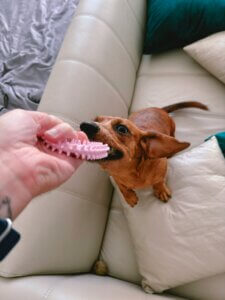
Redirecting works best when it feels like interaction, not rejection. The goal isn’t to hand your puppy a toy and walk away. It’s to keep the interaction going, just with something appropriate instead of your hands or clothes.
- Make the toy exciting using movement.
- Be calm and predictable in how you move it.
- If your puppy is biting clothing, gently remove them and immediately offer the toy.
- It might not be the first toy you offer that works. Try a few.
- Avoid yelping or shouting “no”, as this often increases excitement and biting.
Arousal and why play often causes more biting
Every time you play with your puppy, you increase their arousal levels. If play ends abruptly, you can be left with a frustrated, over-aroused puppy who then bites you instead.
Think of it like revving a car engine. You need to bring the revs back down before switching off.
After play, include calming activities such as:
- Scatter feeding
- Sniffing games
- Lick mats
- Chewing time
- Calm movement and gentle transitions
This step alone often dramatically reduces biting.
Why puppies bite more after walks
Walks can be hugely stimulating for young puppies. New smells, people, dogs and sounds can overload their nervous system. A puppy that looks “hyper” after a walk is often actually overtired.
Shorter, calmer walks with plenty of sniffing often reduce biting far more than longer, exciting ones. I talk more about this balance in my puppy socialisation guidance, which you can read here:
Puppy socialisation and confidence building
When extra help might be needed
In most cases, puppy biting improves with sleep, structure and support. In rarer cases, persistent biting may be linked to pain, digestive discomfort or difficulty regulating emotions. If something doesn’t feel right, it’s always OK to seek professional help.
Nutrition and behaviour
What your puppy eats also plays a role in how well they cope with growth, teething and emotional regulation. If you want to explore this further, you may find these resources helpful:
Some owners also choose gently cooked food options. Examples include Butternut Box and Different Dog, which I discuss in more depth elsewhere on my site.
A quick recap
- Puppy biting is normal and temporary
- It often intensifies around 4.5 to 5 months
- Sleep is essential
- Chewing helps regulate emotions
- Redirecting should feel interactive
- Play needs calm-down time afterwards
- Spaniels and doodles often need extra support with arousal
Need extra support with puppy biting?
If biting feels overwhelming or part of a bigger picture, my Dream Puppy Programme offers tailored 121 support across Coventry, Kenilworth and Leamington Spa. I’ll help you put the right structure, routines and training in place so this phase passes more smoothly.