Date of Project: 2026
Type of Client: Puppy owner
Client/Project Name: Kelly & Ziggy
Project Location: Coventry
Service Provided: Dream Puppy Programme followed by additional maintenance support
Helping Ziggy Settle Into Puppy Life
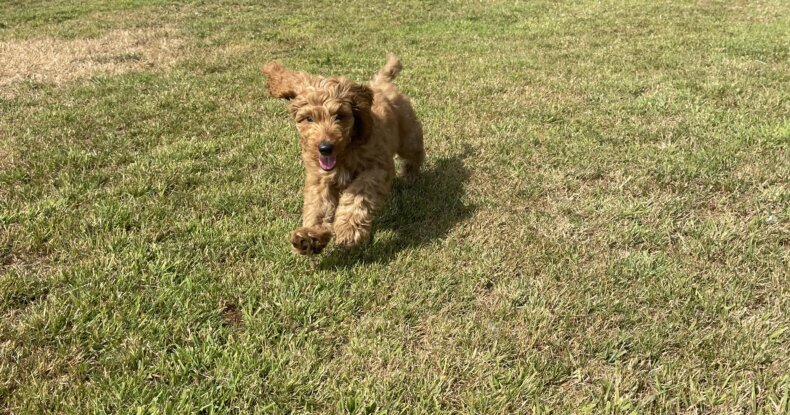
Ziggy was just eight weeks old when I first met him.
An Australian Labradoodle puppy, he had only just arrived home when Kelly contacted me for help.
Like many new puppy owners, Kelly had gone into puppy ownership feeling prepared. But within those first few days, everything suddenly felt much more overwhelming than expected.
Sleep was difficult.
Crate training was difficult.
Ziggy found it hard when Kelly moved away from him or disappeared from sight.
And Kelly was exhausted, worried about getting things wrong and anxious about what life with a puppy was going to look like.
The first priority wasn’t teaching Ziggy lots of behaviours.
It was helping both of them settle.
Getting Ziggy Comfortable in His Crate
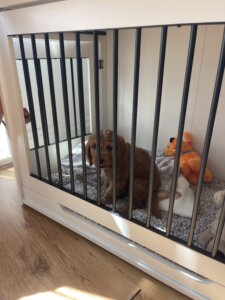
Ziggy initially found his crate difficult.
Rather than putting him in and expecting him to get used to it, we worked on changing how he felt about being in there.
We used crate games, food, chews and reinforcement to build value in the crate so that it became somewhere Ziggy actively wanted to go.
We also looked carefully at his daytime routine.
Young puppies need a huge amount of sleep, and overtiredness can contribute to biting, restlessness and difficulty settling.
So we worked on helping Ziggy get enough proper rest during the day as well as improving his nighttime routine.
The change came quickly.
Ziggy began settling much more comfortably and was soon sleeping through the night in his crate.
Kelly later described that as something that “honestly felt like a miracle at the time”.


Preventing Separation Problems From the Beginning
Another big concern was Ziggy’s discomfort when Kelly moved around the house or went out of sight.
Rather than waiting until this developed into a bigger problem, we started working on independence early.
We used simple games that helped Ziggy learn that Kelly moving away didn’t mean anything worrying was about to happen.
That included gradual exercises where she moved around the house, stepped away for very short periods and returned before Ziggy became distressed.
Later, we introduced exercises such as Door Is a Bore, where the movement associated with leaving became deliberately boring and predictable.
The goal was never to make Ziggy “tough it out”.
It was to help him build confidence at a pace he could genuinely cope with.
Over time, he became much more comfortable pottering around independently and relaxing while Kelly moved around the house.
Looking at the Whole Puppy
As with all of my puppy programmes, we didn’t just focus on individual training exercises.
We looked at Ziggy’s whole routine, including:
- sleep
- nutrition
- biting and mouthing
- enrichment
- toilet training
- equipment
- handling
- play
- confidence
- independence
- preventing separation issues
- body language
We also discussed whether his food was working well for him and how to make meals and training rewards more useful.
Puppy behaviour is rarely about one single thing.
Sleep, food, routine, frustration and development can all affect how well a puppy is able to cope and learn.
Building Strong Puppy Foundations
Once Ziggy was settling better, we could focus on the everyday skills Kelly wanted.
We worked on:
- sit
- down
- stand
- hand touch
- release cues
- toy play
- toy switching
- retrieve
- wait
- stay
- impulse control
- lead walking
- recall
- settling
- bed games
Ziggy was a very bright puppy and picked things up quickly.
The aim was never to rush through as many behaviours as possible.
It was to build skills that would actually be useful in real life.
Building Engagement and Focus
One of Ziggy’s real strengths became his focus.
We worked on rewarding natural check-ins and helping him learn that choosing to look back at Kelly was valuable.
That became important both on lead and off lead.
Rather than constantly calling him back or trying to control every movement, we reinforced the moments where Ziggy naturally chose to reconnect.
That relationship became the foundation for so much of his later training.



Giving Ziggy Safe Off-Lead Freedom
Kelly was understandably nervous about letting Ziggy off lead.
Having previously lived with reactive dogs, she knew how difficult walks could become and was worried about getting this wrong.
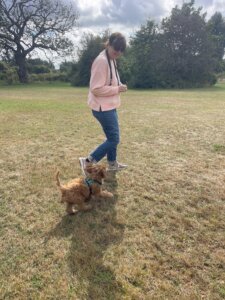
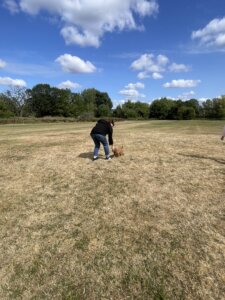
So we introduced off-lead freedom carefully.
We worked on:
- natural check-ins
- rewarding orientation back towards Kelly
- scatter recalls
- high-value reinforcement
- keeping appropriate distance from distractions
- teaching Ziggy that he didn’t need to greet every dog or person
Kelly also used my one-in-three rule.
Ziggy might greet one suitable dog or person, while the others simply became things he noticed and moved past.
This helped him learn that seeing another dog didn’t automatically mean rushing over.
Ziggy did brilliantly.
His recall developed really well, his focus outdoors became excellent and Kelly became much more confident allowing him the freedom to explore.
Teaching Ziggy That the World Was None of His Business
Another important part of Ziggy’s outdoor training was helping him learn that he didn’t need to respond to everything happening around him.
People.
Dogs.
Wildlife.
Movement.
We rewarded calm observations and natural check-ins rather than allowing every distraction to become an interaction.
If something caught his attention, Kelly could mark that moment and reward him for remaining connected with her.
The goal wasn’t to stop Ziggy noticing the world.
It was to teach him that he could notice it and still carry on with his own walk.
Building Calm Lead Walking
Lead work was another area where Ziggy made really good progress.
We worked on building value for being beside Kelly, changing pace, using movement and rewarding him for choosing the right position.
Consistency mattered.
Pulling gets dogs where they want to go, so if pulling repeatedly works, it becomes very reinforcing.
Instead, Ziggy learnt that staying connected and moving alongside Kelly was worthwhile.
His focus became one of his strongest skills.
Teaching Ziggy to Settle
We also worked on bed games and calmness.
The bed became a clear place where Ziggy could relax rather than feeling that he always needed to be involved in everything.
We initially built value for the bed using food, then added a release cue so Ziggy understood when the exercise was finished.
From there, we could add small amounts of movement and distraction.
This became useful not just at home but for future situations such as cafés, holidays and visiting other places.
Confidence, Independence and Enjoying Puppyhood
As Ziggy grew, one of the nicest changes was seeing his confidence develop.
He became comfortable exploring.
He was increasingly independent around the house.
His recall was strong.
His outdoor focus was excellent.
And Kelly became much more confident too.
That is an important part of puppy training that often gets overlooked.
Sometimes the dog is progressing beautifully, but the owner still needs support to trust the work they have done.
Kelly had been anxious about walks, off-lead freedom and getting things wrong.
Over time, that changed.
She learnt how to read Ziggy, how to support him and when to give him space to make good choices.

Supporting Kelly as Well as Ziggy
Kelly regularly used the support available between sessions to ask questions about everyday puppy life.
Those small questions matter.
Puppies change incredibly quickly, and what felt straightforward last week can suddenly feel completely different.
Having somewhere to check whether something was normal, whether an approach needed tweaking or whether she was on the right track gave Kelly reassurance while Ziggy was developing.
By the end of our work together, both of them had grown in confidence.
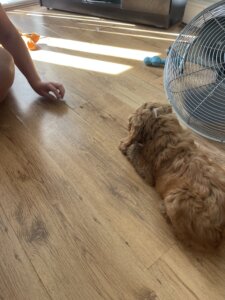
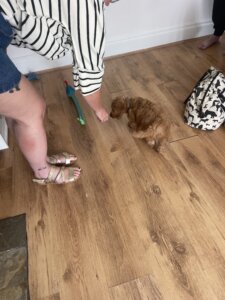
Ziggy had become a happy, capable young dog.
And Kelly understood much more clearly why the training worked and how to continue it.
Client Testimonial
Kelly left the following five-star Google review:
“Carrie genuinely saved our lives — and our sanity — when we first got Ziggy!
I went into getting a puppy thinking I knew what I was doing, but by day two I was completely overwhelmed, exhausted and wondering what on earth I’d done. I reached out to Carrie and she was so kind, understanding and reassuring. With her help, we had Ziggy sleeping through the night in his crate, which honestly felt like a miracle at the time!
Having always had reactive dogs, I already knew that my anxiety was probably going to be more of an issue than Ziggy himself. I was really anxious about walking him and letting him off lead, but Carrie gave me the confidence and practical advice to help me manage that. She got Ziggy off lead safely and, more importantly, taught us how to keep him safe and give him the freedom to enjoy being a puppy.
The WhatsApp access has also been invaluable. Being able to ask questions when something comes up, no matter how small or silly it feels, has given us so much reassurance.
Carrie has been amazing with both Ziggy and us. She doesn’t just train the dog — she gives you the confidence to understand what you’re doing and why. I honestly don’t know how we would have got through those first few weeks without her.
I couldn’t recommend her highly enough!”
Project Outcomes
- Programme: Dream Puppy Programme followed by additional maintenance support
- Starting Age: Eight weeks
- Breed: Australian Labradoodle
- Crate Training: Ziggy learnt to settle and sleep comfortably in his crate
- Sleep: Sleeping through the night
- Independence: Much more comfortable when Kelly moved around the house or out of sight
- Recall: Strong recall foundations and successful off-lead freedom
- Focus: Excellent natural check-ins and engagement outdoors
- Lead Walking: Strong foundations for walking calmly alongside Kelly
- Socialisation: Learnt that he didn’t need to greet every dog or person
- Settling: Bed games and calmness work introduced for home and future outings
- Owner Confidence: Kelly became much more confident with walks, off-lead freedom and understanding Ziggy
- Client Satisfaction: Five-star Google review
Professional Credentials and Training Standards
Carrie’s Canines & Friends provides professional puppy and dog training using modern, reward-based methods.
My approach is supported by recognised industry credentials and ongoing professional development, including:
- IABTC Accredited Instructor
- SA Pro Behaviour Consultant
- Member of the Pet Professional Guild
- Ongoing professional development and education
Ziggy’s story shows how thoughtful puppy training can support far more than basic behaviours.
Helping a puppy feel safe, sleep well, build independence and develop a strong relationship with their owner creates foundations that can support them for life.
Puppy Training That Builds Confidence From the Start
Ziggy didn’t need to be pushed into independence.
He needed to learn that being on his own for short periods was safe.
He didn’t need to be restricted from exploring.
He needed a strong recall and the confidence to check back in.
And Kelly didn’t need to be told simply to worry less.
She needed practical skills, reassurance and a plan she could trust.
That combination helped Ziggy grow into a confident, engaged puppy while giving Kelly the confidence to actually enjoy him.
if you would love some help and guidance with you puppy, my Puppy Training Sessions can help guide and support you