Puppy Sleep Training: How to Get Your New Dog to Sleep Through the Night
Bringing home a new puppy is exciting—until the reality of sleep deprivation kicks in.
If your nights have turned into an endless loop of whining, bathroom breaks, and puppy eyes staring at you at 3 AM, you’re not alone.
But don’t worry! With the right approach, you can help your furry friend settle in and sleep peacefully through the night (and reclaim your own sanity).
Here’s how to set your pup up for success.
Why Do Puppies Struggle to Sleep Overnight?
New environments, separation anxiety and an undeveloped bladder all contribute to restless puppy nights.
Just like human babies, puppies need time to adjust to their new routine.
Understanding their needs and providing overnight puppy care can make a huge difference in how quickly they adapt.
Also, let’s be honest—puppies are like tiny furry toddlers.
They have zero concept of time and would prefer to party at 2 AM if given the chance.
Your job? Convince them that nighttime is for snoozing, not zooming.

Step 1: Establish a Consistent Bedtime Routine
Dogs thrive on routine, and a structured bedtime routine signals to your puppy that it’s time to wind down.
Try this simple evening schedule:
Feed dinner a few hours before bed to allow time for digestion and toilet breaks. (A full puppy is a sleepy puppy!)
Engage in light playtime to burn off excess energy—but don’t turn it into a full-on wrestling match.
Take a final toilet break right before bedtime to prevent midnight accidents.
Provide a calm wind-down period with gentle stroking, training or a chew to relax them. (Think of it as puppy meditation.)
Pro Tip: Puppies can have FOMO (Fear of Missing Out) at night.
Make bedtime feel like the best thing ever by pairing it with a special bedtime treat or comfort toy.
Step 2: Create a Comfortable Sleeping Space
Your puppy’s sleep environment plays a crucial role in how well they rest. Here’s how to make it cozy and inviting:
Use a crate or a designated sleeping area to create a secure, den-like space. (Think of it as their own VIP lounge.)
Include a soft bed and familiar-smelling blanket to provide comfort.
Place the crate near your bed initially to ease anxiety, then gradually move it over 7 days if needed to its final spot.
Keep the area quiet and dimly lit to encourage sleep. (No puppy raves allowed.)
Some puppies also love heartbeat toys or white noise machines, which mimic the sounds of their littermates and help them doze off and can help.
Step 3: Handle Middle-of-the-Night Wake-Ups the Right Way
New puppies may still wake up overnight, but how you respond matters:
Stay calm and quiet—avoid turning on bright lights or engaging in play. (No midnight puppy parties!)
Take them for a quick toilet break if needed, but keep it all-business. In, out, back to bed. Make it as boring as possible.
Return them to their sleeping space immediately to reinforce nighttime as sleep time.
Important: if your puppy is whining, resettle them using your gentle voice and you can gently put your hand on the crate to resettle.
Unless it’s a true potty emergency or they are getting into distress leave them in the crate.
Puppies are smart—if they learn that whining gets them out of the crate and fun times, they’ll turn into tiny, furry manipulators.
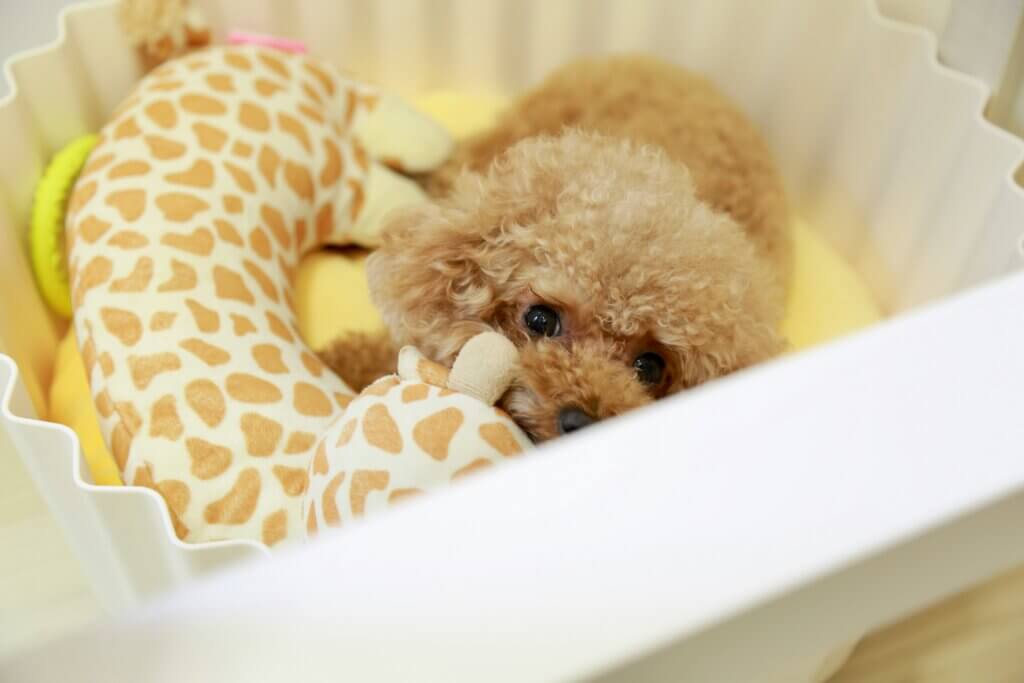
Step 4: Teach Your Puppy to Self-Soothe
Encouraging independence is key to successful puppy sleep training. If your puppy whines at night:
Wait a few moments before responding to see if they settle on their own. iF they don’t speak to them softly to help resettle.
Provide a comfort item like a stuffed toy or a warm blanket.
Use a calming aid such as a heartbeat toy or a white noise machine if needed.
If they’re just testing the waters, responding too quickly can teach them that whining = attention. (And that’s a habit you don’t want to reinforce!)
Note : if they are not settling or the whining increases, they are no longer learning and you need to get them out to settle them down again before putting back to bed.
Step 5: Common Sleep Training Challenges & How to Solve Them
Even with a great routine, hiccups happen. Here’s how to troubleshoot common sleep training struggles:
1. My puppy still cries at night!
Double-check that all their needs are met (toilet, comfort, hunger).
Try leaving an item with your scent in their crate.
Be patient! Some puppies take a week or two to fully adjust.
2. My puppy wakes up too early!
Adjust bedtime slightly later to see if it helps.
Use blackout curtains to keep the room dark.
Delay morning excitement—if you rush to them the moment they wake up, they’ll learn to wake you earlier!
3. My puppy is full of energy at bedtime!
Do evening training earlier in the night, this will tire their brain.
Avoid overstimulation close to bedtime—wind-down time is key! no play time close to bed!
Step 6: Stay Patient and Consistent
Sleep training takes time, but consistency is everything.
Stick to the routine, and within a few weeks, your puppy should start sleeping through the night.
If they regress, don’t panic—puppies, like kids, have ups and downs. Stay the course!
Final Thoughts...
If you’re wondering how to get a new puppy to sleep through the night, remember that patience and structure are your best friends.
Puppies thrive on consistency, so set a routine, create a comfy sleep space, and reinforce good habits.
Soon enough, both you and your pup will be enjoying full nights of restful sleep.
Bonus Tip: If all else fails, remind yourself that one day, your pup will be a lazy adult dog who refuses to get out of bed. And when that day comes, you’ll miss these puppy nights… maybe. 😉

Need more puppy training tips?
Check out my other guides: