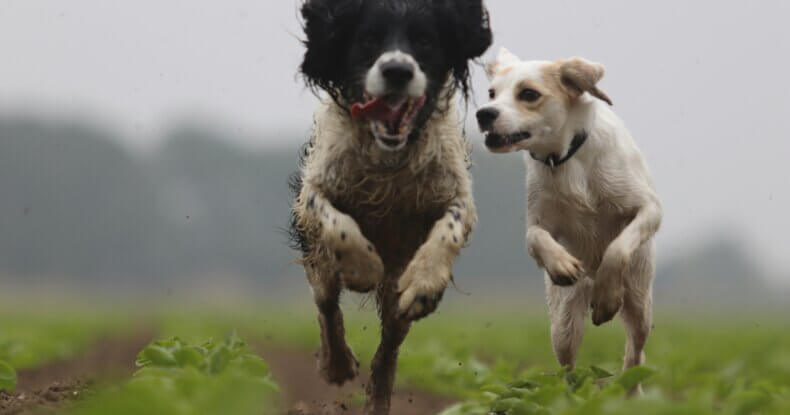
If your dog comes back when he wants to, you’re definitely not alone. Many owners tell me their dog will recall perfectly at home but ignores them once they’re outside and something more interesting appears.
One of the most common things I hear from owners is:
“He comes back… but only when he feels like it.”
You call your dog and you know they’ve heard you.
Their ears twitch.
They glance over at you.
Then they go straight back to sniffing, or carry on running around as if nothing happened.
Sometimes they’ll come back eventually. Other times they’ll run straight past you. And if there’s another dog, a squirrel, or something interesting to sniff, recall completely disappears.
It can feel incredibly frustrating.
But the truth is, when a dog comes back when he wants to, it’s usually because recall has accidentally become optional.
Many owners feel frustrated when their dog comes back when he wants to, especially when distractions like dogs, squirrels or strong scents are involved.
What Selective Recall Looks Like
Selective recall often looks like this:
- Your dog comes back perfectly in the house or garden
- They come back when nothing else is happening
- But outside, distractions change everything
You might notice things like:
- Sniffing and ignoring you
- Checking in but not returning
- Looking at you, then carrying on doing their own thing
- Running straight past you
- Only recalling when there are no distractions around
Owners often say, “I know he can hear me.”
And they’re usually right.
The dog has heard the cue. They’re just choosing something else in that moment.
Why Your Dog Comes Back When He Wants To
\Many owners describe this as their dog choosing when to listen. In reality, the dog has simply learnt that the environment is more rewarding than coming back to their owner.
Why Dogs Develop “Optional” Recall
Dogs do whatever has worked for them in the past.
If ignoring recall allows them to continue:
- sniffing
- playing with another dog
- chasing something
- exploring the environment
then ignoring you becomes rewarding.
Anything we practise, we get better at.
So if a dog repeatedly rehearses ignoring the recall cue, they become very good at doing exactly that.
The Biggest Recall Mistakes I See
1. Repeating the recall cue
Owners often call their dog multiple times.
“Buddy, come. Buddy! Come! Buddy come here!”
Very quickly the cue becomes background noise.
Your dog learns they don’t need to respond the first time.
Protect your recall cue. Say it once.
2. Calling your dog when they are over threshold
If your dog is already highly aroused, recall will struggle.
For example:
- they are chasing
- playing intensely with another dog
- completely absorbed in scent
At that moment, their brain is not in a learning state.
Instead, wait for a small break in the activity.
If your dog is playing with another dog, watch for the pause.
If your dog is sniffing, wait for the moment they lift their head.
That’s the moment to recall.
Setting your dog up for success matters.
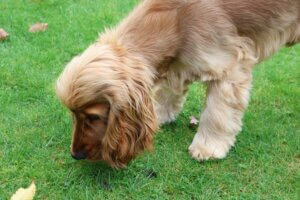
3. Calling when you know your dog won’t come
This is a really common one.
Owners call their dog even though they can see the dog is unlikely to respond.
Every time the dog ignores that cue, the recall becomes weaker.
Your dog learns that responding is optional.
4. Giving too much freedom too early
If a dog doesn’t yet have a reliable recall, giving them full off-lead freedom allows them to rehearse ignoring you.
This is where long lines are incredibly useful.
A long line allows your dog freedom while still preventing them from practising the behaviour you don’t want.
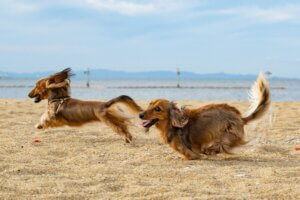
A Common Spaniel Example
I see this a lot with spaniels.
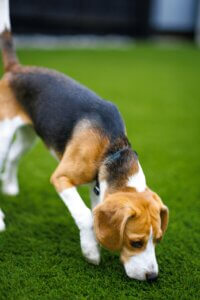
The dog is happily sniffing with their nose down, completely absorbed in scent.
You call them.
Their ears twitch.
They’ve heard you.
But the scent is more rewarding in that moment.
So they carry on.
This isn’t stubbornness. It’s reinforcement.
The scent is simply winning.
How to Start Fixing Selective Recall
The goal is to build a recall history where coming back to you is always worthwhile.
Some key principles include:
- calling your dog when they can succeed
- rewarding generously when they return
- practising recall in easier environments first
- gradually adding distractions
- using long lines to prevent rehearsal of ignoring
Distance and environment matter far more than people realise.
This links closely to something I explained in my blog Why Your Dog Listens at Home but Not Outside, where I talk about how dogs struggle to generalise training between environments.

What Good Recall Actually Looks Like
Reliable recall doesn’t happen overnight.
It’s built through hundreds of successful repetitions.
Eventually, you’ll see a different pattern:
Your dog hears the recall cue.
They turn immediately.
And they run back to you.
Even when something interesting is happening.
If Your Dog Only Comes Back When He Wants To
The good news is that recall can absolutely be improved.
But it requires structure, consistency, and setting your dog up to succeed rather than hoping they will come back.
This is exactly what I work on with owners inside my Dream Dog Programme.
We build engagement, teach clear recall structure, and practise skills in the real world so that your dog learns to respond even when distractions are present.
Because recall shouldn’t feel like a gamble.
It should feel reliable.
The charity Dogs Trust also explains that recall training should start in low distraction environments before gradually increasing difficulty.
Link Dogs Trust recall training to:
https://www.dogstrust.org.uk/dog-advice/training/recall