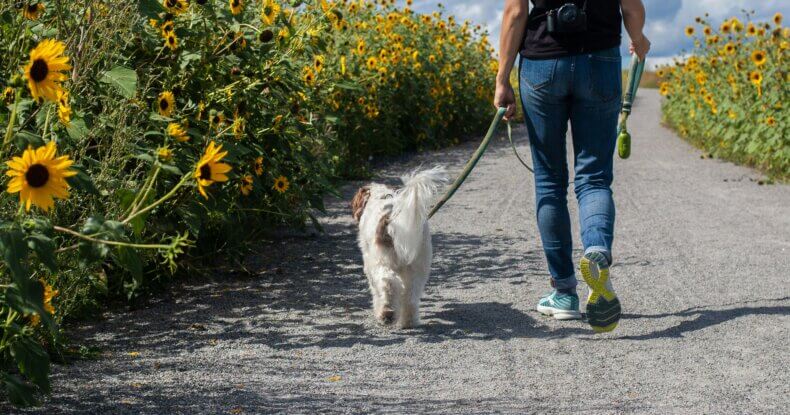
If you’re searching for how to stop dog pulling on lead, I can almost guarantee you’re tired.
Tired of being dragged down the street.
Tired of your shoulder aching.
Tired of feeling like you’re being pulled into the road.
Tired of saying “heel, heel, heel” on repeat.
I hear it all the time.
“He drags me everywhere.”
“I feel ridiculous.”
“He’s not listening to me at all on the lead.”
“I dread walks.”
First, let’s say this clearly.
Dogs don’t pull because they’re dominant.
They pull because it works.
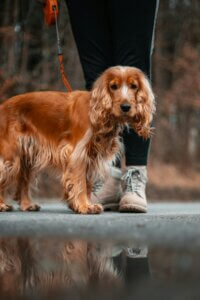
Why Dogs Pull on the Lead
If pulling gets your dog to where they want to go faster, they will keep doing it.
Pulling is incredibly self-reinforcing.
- Pulling gets them to that dog
- Pulling gets them to that person
- Pulling gets them to that smell
- Pulling gets them to the park quicker
Anything we practise, we get better at. Our dogs are no different.
For spaniels and working breeds especially, scent is exciting. Movement is exciting. The world is stimulating.
So if your dog is pulling on the lead, it’s usually a combination of:
- Arousal
- Reinforcement history
- Environment
- And opportunity
Not disobedience.
The Biggest Mistakes I See
When owners are trying to figure out how to stop dog pulling on lead, I often see:
1. Constant tension on the lead
You’re managing the pulling, not teaching loose lead walking.
2. Repeating “heel” over and over
Cueing constantly doesn’t create understanding.
3. Jumping straight into busy environments
Your dog hasn’t mastered level 2, but you’re in level 10.
4. Relying purely on equipment
Figure of eight leads, head collars, different harnesses.
Here’s my honest take.
Your dog will eventually learn to pull in anything.
Equipment can help create a window of opportunity. I like a two-point harness for that reason. It changes the feel slightly and gives you a chance to teach properly.
I am not completely against head collars either, especially where health and safety is a genuine concern. But they must be introduced correctly. You cannot just stick one on and hope for the best.
Equipment is management.
Training is teaching.
You can read here about How Your Dog Listens at Home But Not Outside
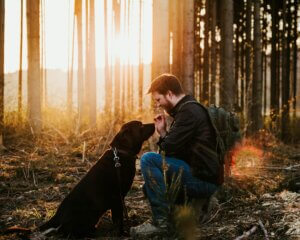
What Actually Stops Pulling
If you want to know how to stop dog pulling on lead properly, it starts with one simple shift.
Make your side the most valuable place to be.
Most dogs have been fed thousands of times in front of their owner. Very few have been reinforced heavily for being calmly by their side.
We start by making that position incredibly rewarding.
- Sit at side
- Stand at side
- Down at side
Start by practising puppy push ups at your side to make it more valuable for being there.
We reinforce it until your dog genuinely wants to hang out there.
Red Light, Green Light
One of the simplest and most effective games I use is Red Light, Green Light.
- Tight lead = red light. We stop.
- Loose lead = green light. We move.
No shouting.
No frustration.
No dragging them backwards.
If the lead is tight, nothing exciting happens.
If the lead goes loose, life continues.
It teaches your dog that loose lead walking is what gets them where they want to go, when the lead is loose.
And we start this in very easy environments.
Not at the busiest park in town.
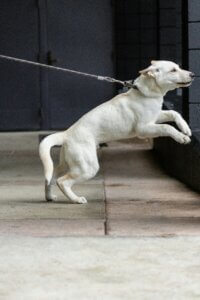
Environment Matters More Than You Think
If your dog can’t walk on a loose lead in your street, they won’t suddenly manage it in a busy park.
Start somewhere boring.
Keep sessions short.
Mix up pace. Change direction. Engage with your dog. Your voice is reinforcing to them.
You’re building connection, not just position.
The Emotional Side Nobody Talks About
Lead pulling doesn’t just affect your dog.
It affects you.
Owners tell me they:
- Start avoiding walks
- Feel resentful
- Feel embarrassed
- Feel stressed
Walks should be enjoyable.
You should not feel tense, bracing yourself with both hands gripping the lead.
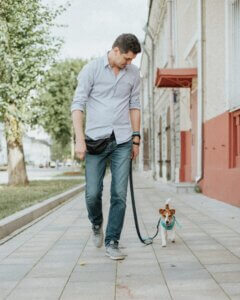
I look for a relaxed owner, one hand on the lead, a soft J shape in it, not constant tension.
That’s what we’re working towards.
If You Don’t Address It Early
If you leave pulling unchecked, you don’t just have a pulling problem.
You build a habit.
A bigger, stronger dog practising pulling daily becomes much harder to retrain later.
That’s why I always encourage starting early. Reinforce “hanging out with me is brilliant” from puppyhood.
Prevention is easier than correction.
What It Looks Like When It’s Working
After working on loose lead walking inside my Dream Dog Programme, what changes isn’t just the pulling.
Owners relax.
Dogs check in naturally.
The lead has a soft J shape.
You’re walking together, not against each other.
No constant cueing.
No tension.
No dread before walks.
Just connection.
If you’re struggling with how to stop dog pulling on lead, and you’re ready to fix it properly rather than managing it, my Dream Dog Programme is designed exactly for this stage.
You can read more about it here:
Because walks should feel calm.
Not like a tug of war.
