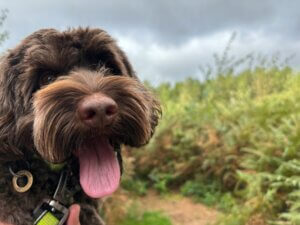
If your dog ignores recall when you call them, and you feel like you’re constantly repeating yourself, you’re not alone.
This is something I see every single week. Owners calling their dog again and again, getting more frustrated each time, and wondering why recall seems to be getting worse rather than better.
Here’s the bit most people don’t realise.
Overcalling doesn’t strengthen recall. It usually weakens it.
And it’s not because owners don’t care. It’s usually because they care a lot.

When recall turns into background noise
I often explain this to clients using the “mum, mum, mum” analogy.
If someone says “mum” once, you respond.
If they say “mum, mum, mum, mum” repeatedly, you eventually learn to tune it out.
Dogs do exactly the same thing.
When recall is repeated over and over, it stops meaning “come back now”. It becomes background noise. Something the dog hears but doesn’t feel the need to respond to straight away.
This is one of the main reasons a dog ignores recall over time. The cue simply loses its value.
Why owners overcall (and it’s not laziness)
Overcalling almost always comes from emotion.
Owners repeat recall because they feel:
- Embarrassed when their dog doesn’t come back
- Anxious about what other people think
- Panicked that they’re losing control
- Frustrated that their dog isn’t listening
In those moments, people believe that saying it louder or more often will help. In reality, tone changes, frustration creeps in, and recall starts to feel negative rather than rewarding.
And if someone was shouting at you from across a field, would you want to run back to them?
A real-life example
I saw this very clearly recently while out walking.
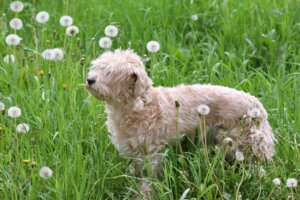
A young dog came charging over, clearly having a great time. The owner was repeatedly shouting the dog’s name and blowing a whistle over and over with no clear pattern. The whistle didn’t mean recall. It was just noise.
As the owner became more frustrated, the dog became less responsive.
The dog wasn’t being naughty. It wasn’t ignoring on purpose. It was simply choosing what felt more rewarding in that moment.
That dog didn’t yet have a recall, and the overcalling was actively teaching it not to respond.
What your dog is actually learning
When a dog ignores recall repeatedly, it’s rarely stubbornness. It’s learning.
Dogs quickly learn that:
- They don’t need to respond the first time
- They can carry on doing what they’re doing
- Coming back is optional
This is what trainers mean when we talk about a poisoned recall cue. The word itself starts to predict pressure, frustration, or nothing happening at all.
The good news is that recall cues aren’t ruined forever. With the right approach, they can be rebuilt.
“My dog has great recall… except when…”
This is something I hear all the time.
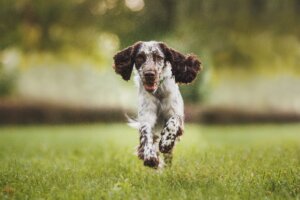
“My dog has great recall, except when there’s another dog.”
“Except when there’s a squirrel.”
“Except when someone’s throwing a ball.”
If recall only works when there are no distractions, you don’t yet have a reliable recall. You have recall in low-distraction environments.
This is where many owners accidentally overcall. They ask for recall when the dog is too far away, too aroused, or too busy to succeed.
Calling your dog when they can’t possibly respond teaches them to ignore the cue.
Distance, distraction and threshold matter
Recall isn’t a single skill. It’s influenced by:
- Distance from you
- The level of distraction
- Your dog’s emotional state
Calling a dog away from a calm dog standing still is very different from calling them away from a dog playing with a ball launcher. One is far harder than the other.
Overcalling often happens when owners skip steps and expect recall to work everywhere before it’s been built properly.
If you’d like to understand this in more depth, I’ve written more about dog recall training here:
👉 [LINK TO MAIN RECALL BLOG]
What to do instead
One of the most important rules I teach is this:
If you’re not confident your dog will come back, don’t call them.
Protect your recall cue.
That might mean:
- Reducing distance
- Lowering distractions
- Waiting for a moment where your dog can succeed
- Using a long line for safety and learning
If you are using a long line, it should never be used to pull your dog back. Walk up the line instead. The long line is there to support training, not create negative associations.
This is how you start building reliable recall rather than constantly testing it.
👉 Resetting Recall
Why this is especially common in busy dogs
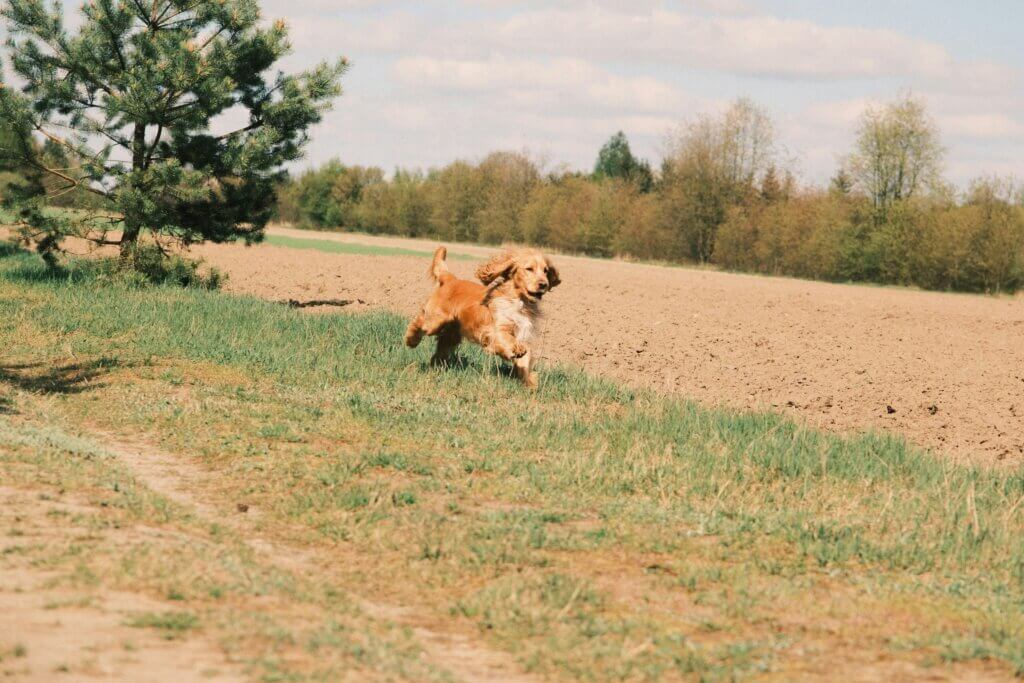
Spaniels, working breeds, doodles and dogs with busy brains are particularly prone to this.
They notice everything. Smells, movement, sounds. Expecting instant recall without building the skill gradually often leads to frustration and overcalling on both sides.
These dogs aren’t disobedient. They just need recall training that respects how their brains work.

The “oh… that makes sense” moment
One of my favourite moments in training is when a client pauses and says, “Oh… that makes sense.”
Dog training shouldn’t feel confusing or overwhelming. When recall keeps going wrong, it’s usually not about effort, it’s about understanding.
Once owners realise that overcalling is teaching their dog to ignore them, everything starts to change.
If your recall feels broken, start here
This is exactly why I created my Recall PDF.
It’s not a magic fix, and it won’t override prey drive overnight. What it does is help you rebuild recall properly, protect your cue, and stop guessing.
If your dog ignores recall and it feels inconsistent, unreliable, or broken, this is the place to start.
👉 Top 3 Steps to Stop Your Spaniel or Doodle Going Self-Employed