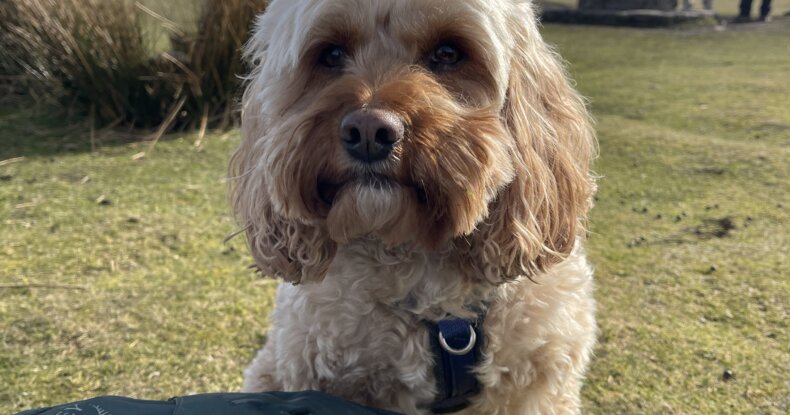
Eric’s story begins
When Eric came into my life as a puppy, I quickly realised he wasn’t going to be straightforward. He was anxious from the start, and what began as small worries soon grew into big reactions. He would bark, lunge, growl, freeze and it could happen even if the person or dog was a good field away. Eric noticed everything and anything.
That’s when my journey with reactive dog training really began. Living with a reactive dog can feel overwhelming, but with the right approach, progress is possible. (For more on reactivity, you can also read this helpful guide from Dogs Trust)
Everyday life became a challenge. Walks were spent scanning the horizon, ready to change direction if needed. Vet trips were stressful. Visitors to the house were carefully managed – Eric often chose to stay upstairs, and I always told guests to leave him be. If he wanted to come down, he could. Forcing him was never the answer.
Even something as small as a bag-for-life left on our walking route was enough to cause him a meltdown. It wasn’t “naughtiness” – it was fear. For Eric, the world felt unpredictable and overwhelming.
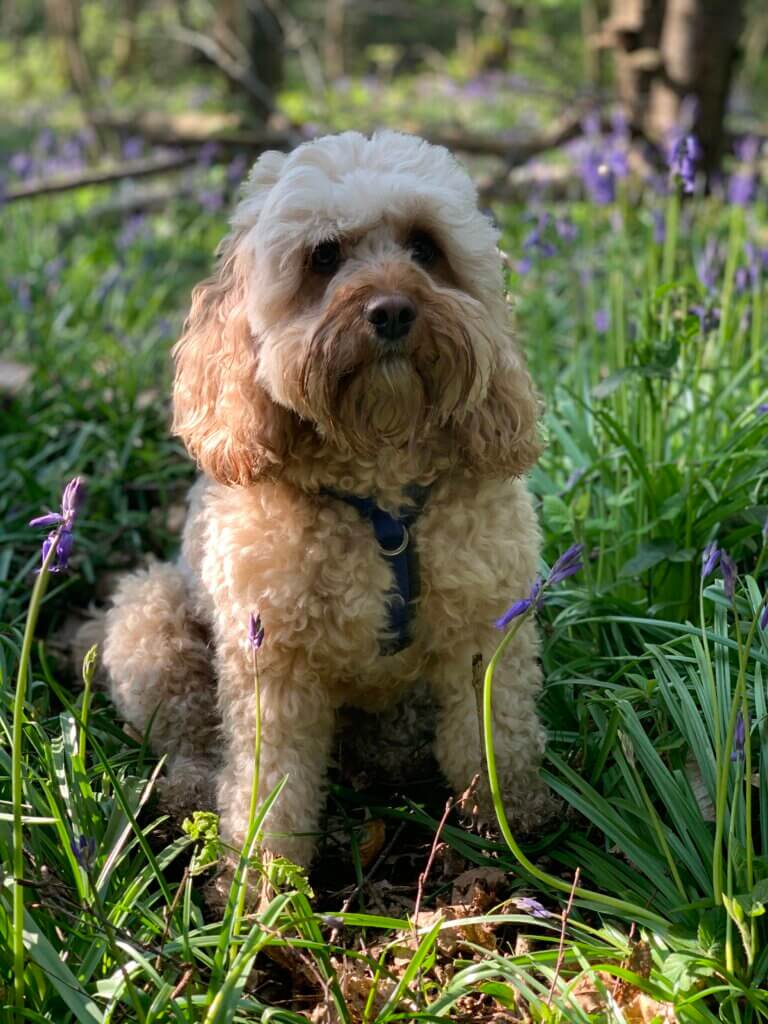
Living with resource guarding
On top of reactivity, Eric arrived with resource guarding behaviours. He didn’t guard food bowls (he was never a big eater), but he would guard high-value items like natural chews or particular household objects.
We managed this carefully. Chews were given only under supervision, and I offered him suitable ones that he could fully consume. Often, I’d give him a choice of two or three so he felt in control – an approach that made him less likely to guard. If he had something he shouldn’t, I used swaps rather than confrontation.
There was even one bed he guarded fiercely. The answer wasn’t to punish him but to change his environment – that bed was simply removed, and the room was kept shut. Management, patience, and choice were key.
Finding the right support
Over the years, I tried countless herbal and natural supplements to help Eric’s anxiety. For some dogs, these can work wonders – but they weren’t enough for him.
The real breakthrough came with prescription support. With medication on board, Eric wasn’t a “different dog” or a zombie. He was still himself, but calmer, more confident, and able to cope with the world around him.
I’ll never forget one camping trip with friends. The first year, Eric kept his distance. The next year, after months of training and the right medical support, he ran straight up to those same friends for fusses. They were astonished – “he’s like a different dog!” And he was.
Three things that helped Eric (that can help your dog too)
1. Counterconditioning
Teaching Eric that people and dogs meant good things (like food, toys, or distance) helped change his emotional response.
2. Management
From avoiding certain triggers to removing guarded items, management reduced his stress and kept everyone safe while he learned.
3. Choice-based training
Eric thrived when he felt he had options. Letting him choose whether to approach or move away built his confidence and trust.
From reactive dog… to stooge dog
If you’d asked me in those early years whether Eric would ever help other dogs, I would have laughed. It felt impossible.
But slowly, year after year, he improved. And eventually, he reached a point where I realised he could be steady enough to help others.
His first session as a stooge dog was nerve-wracking for me. I told the client honestly – if Eric wasn’t comfortable, I’d stop straight away. But he was brilliant. Focused on me, calm around the other dog, and quietly showing them what relaxed body language looked like.
Eric went on to help many dogs. Some terriers in particular adored him – when Eric was around, they felt less worried about the world. The dog who once barked and lunged at others had become the steady, calm presence they needed.
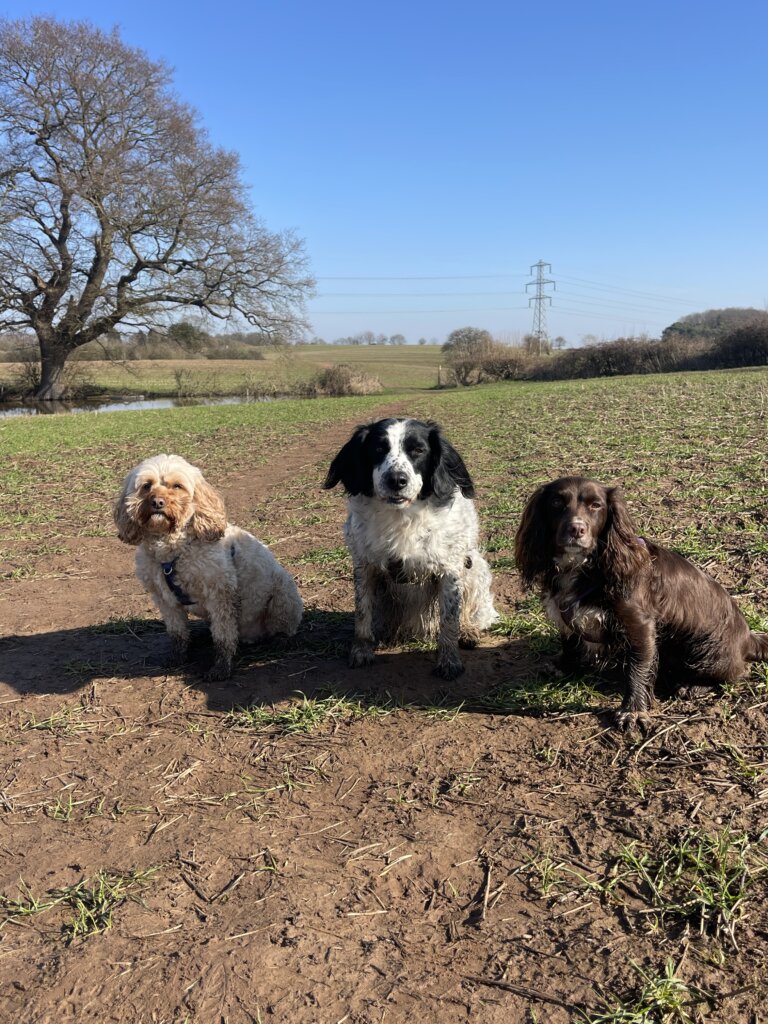
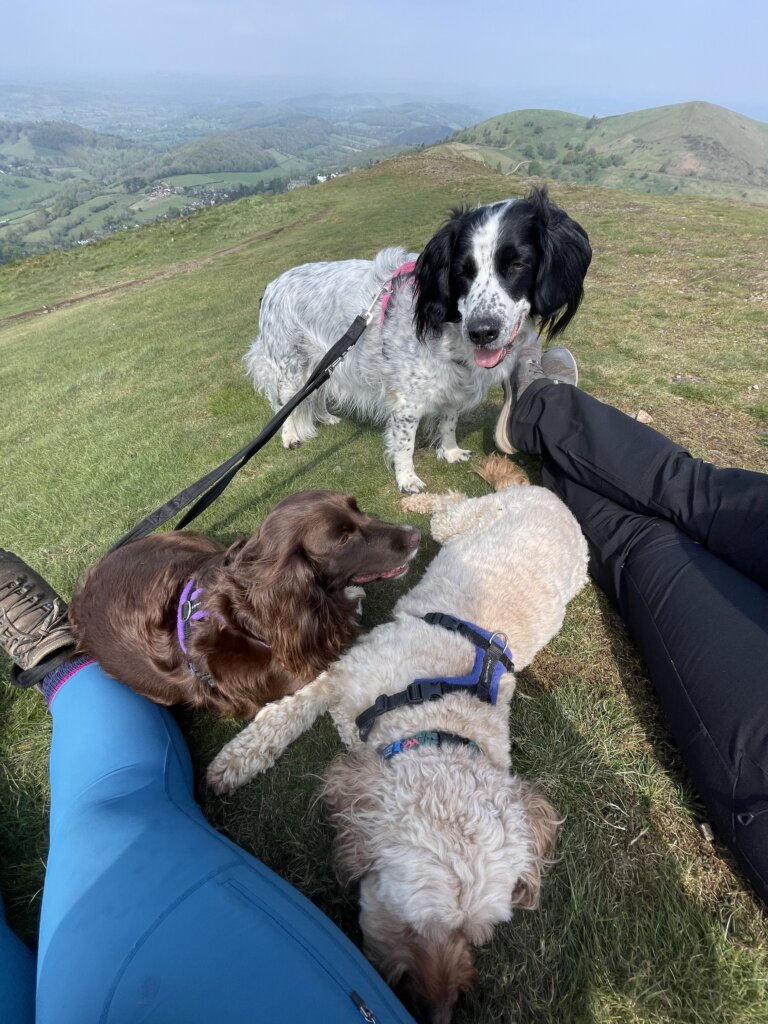
The stooge dog team: Maisie, Eric, and Envy
Eric wasn’t the only one. Maisie, my oldest, has been my reliable stooge dog for years – calm, steady, and always ready to work for a sausage. Envy, my youngest, now carries on that work with her bright, bubbly energy.
Each dog has a different personality, which gives reactive dogs the chance to practise with different energies and approaches. But Eric will always be remembered as the one who surprised me the most.
What Eric taught me
Eric taught me patience. Living with a reactive dog means planning every walk, thinking ahead, and being constantly aware of your surroundings. It’s exhausting at times. But it also teaches you to advocate for your dog, to speak up for their needs, and to slow down.
He also reminded me that progress doesn’t happen overnight. It took years for Eric to become the dog he was – but every small step forward mattered.
Eric passed away in June 2025, but his legacy lives on in the dogs he helped, and in the lessons he taught me.
Final thoughts: Hope for reactive dog owners
If you’re living with a reactive dog, please know this: change is possible. It won’t be quick, and it won’t always be easy, but with patience, consistency, and the right support, your dog can improve.
Eric went from hiding upstairs and barking at strangers to calmly walking alongside dogs who once felt just like him. That transformation is why I do what I do.
I offer Reactive Dog Training in Coventry, Leamington Spa, and Kenilworth.
Book your free call today, and let’s start your dog’s journey.
- Dogs Trust – Reactivity Advice: https://www.dogstrust.org.uk/advice/understanding-your-dog/reactivity
- VetHelpDirect – Behavioural Medication in Dogs: https://vethelpdirect.com/vetblog/2022/05/02/behavioural-medication-in-dogs/